
Side Dishes
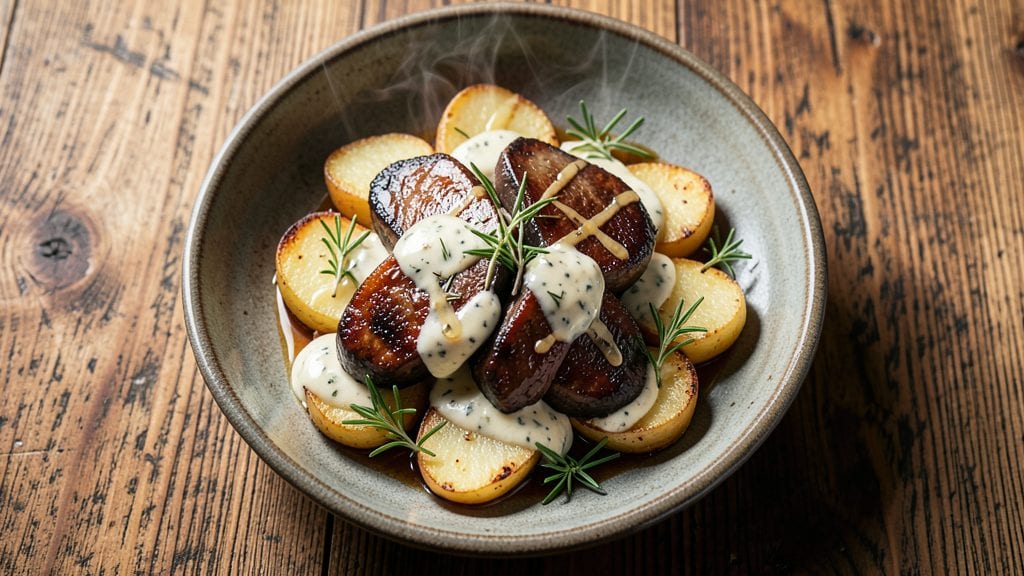
This chicken liver and potatoes recipe transforms humble offal into a restaurant-worthy dish with crispy celery crusts and rich pan gravy—exactly the kind of meal that makes Sundays special.
Growing up in small-town Georgia, I learned that proper technique turns tough cuts into melt-in-your-mouth perfection, and this method delivers every time. The secret lies in searing the livers just until they're tender, then creating a crispy celery crust that adds texture without overpowering the delicate flavor.
The potatoes here are roasted until golden and fluffy inside, their edges caramelizing in the oven while the livers develop a deep, savory crust. A splash of lemon brightens the dish, cutting through the richness, and the buttery pan gravy ties everything together with its velvety sheen.
This isn't just a side dish—it's a complete meal that feels like a home-cooked feast, even when served alone.
What sets this recipe apart is the balance: crispy livers with tender centers, fluffy potatoes that hold their shape, and a gravy so rich it makes every bite worth savoring. The celery crust adds a satisfying crunch, while the herbs infuse the gravy with freshness.
It's the kind of dish that turns weeknight dinners into an experience, proving that even offal can shine when handled with care.
Perfect for a hearty Sunday supper or a special occasion, this recipe scales beautifully for two or four. The technique is straightforward once you understand the key steps—searing, crusting, and reducing the gravy properly. Let's bring this classic dish to your table with professional results at home.
Ingredients for chicken liver with potato
Fresh livers, crispy celery crusts, and golden potatoes—this dish delivers restaurant quality at home.
| Ingredient | Amount | Notes |
|---|---|---|
| Chicken Livers 🍗 | 1 ½ lb | Fresh, trimmed of connective tissue |
| Yukon Gold Potatoes 🥔 | 2 lbs | Medium size, halved lengthwise |
| Celery Stems 🧅 | 3 whole | Thinly sliced, about 2 cups |
| Unsalted Butter 🧈 | ¾ cup | Cold, cut into 1-inch pieces |
| Shallots 🧅 | 2 whole | Minced, about 2 tbsp |
| Garlic Cloves 🧄 | 4 cloves | Minced, about 1 tbsp |
| Fresh Thyme Leaves 🌿 | 1 tbsp | Chopped, stems removed |
| Fresh Parsley Leaves 🌿 | ¼ cup | Chopped, for garnish |
| Lemon Juice 🍋 | 2 tbsp | Freshly squeezed |
| Chicken Stock 💧 | 1 cup | Homemade or quality store-bought |
| All-Purpose Flour 🌾 | 1 tbsp | For gravy thickening |
| Sea Salt 🧂 | 1 ½ tsp | Kosher or fine sea salt |
| Freshly Ground Black Pepper 🌶️ | ½ tsp | Cracked over livers |
| Extra-Virgin Olive Oil 🫒 | 1 tbsp | For searing livers |
The chicken livers are the star, so source them fresh from a trusted butcher or the meat department at Whole Foods or Kroger. Look for livers that are bright red with minimal yellow fat—this indicates freshness. Trim any connective tissue or membranes before using, as these can make the livers tough. Yukon Gold potatoes are ideal for their creamy texture, but any waxy variety will work. Celery should be crisp with no brown spots; the inner stalks are more flavorful. If you can't find fresh thyme, dried works at one-third the amount, but fresh is preferred for that bright herbal note.
No fresh thyme? Dried thyme or oregano will work in a pinch, though the flavor will be more muted. Substituting shallots with onion is fine, but shallots add a subtle sweetness that complements the livers beautifully. For the celery crust, if you can't find fresh celery, frozen chopped celery thawed and drained works, though texture may vary slightly. The lemon juice is crucial—bottled lemon juice lacks the brightness of fresh, so if you're using it, add an extra half tablespoon. For the gravy, if you don't have chicken stock, vegetable stock works, though the flavor will be slightly different.
Livers and potatoes can be prepped ahead—trim the livers and halve the potatoes up to 2 days in advance, storing them separately in airtight containers in the fridge. The celery crust can be made up to 1 day ahead and stored in the refrigerator. Once cooked, the dish reheats beautifully—simply warm the livers and gravy in a skillet over medium heat for 3-4 minutes. The potatoes can be reheated in the oven at 375°F for 15-20 minutes until crispy again. This recipe is best served immediately, but leftovers keep for 2 days in the fridge.
Why You'll Love This Recipe
- One-Pan Magic: I swear by this recipe when I’m too tired to wash extra dishes. Slice the potatoes, sear the livers—boom, everything cooks together in one pan with that rich butter and shallot base. The celery adds just enough crunch without extra effort.
- Rich Without Trying: That first bite of crispy potato meets tender, buttery chicken liver—it’s like a hug for my taste buds. The shallots caramelize into something sweet and deep, while the butter ties it all into pure, comforting satisfaction. (Yes, even on a Tuesday night.)
- Budget Feast: Honestly, chicken livers are a secret weapon for stretching meals. A pound feeds four with leftovers, and Yukon Golds add that buttery texture without breaking the bank. I’ve served this for weeknight dinners, potlucks, and even a fancy-ish brunch—no one ever guessed it was budget-friendly.
- Leftovers That Don’t Suffer: Between us, most recipes turn sad the second day. Not this one. The potatoes stay tender, the livers keep their richness, and the flavors only deepen. I’ll pack it for lunch or reheat it for a quick supper—no one complains, and I save money doing it.
Step-by-step instructions for chicken liver and potatoes
Here's the method that delivers perfectly seared livers and tender potatoes with that signature crispy celery crust.
Prepare and Sear the Chicken Livers
Start by trimming any connective tissue from the 1.5 lb chicken livers and pat them completely dry with paper towels. This step is crucial for achieving that crispy exterior we're after. Season each liver generously with 1.5 tsp sea salt and 0.5 tsp freshly ground black pepper, pressing the seasoning into the surface.
Heat 1 tbsp extra-virgin olive oil in a large skillet over medium-high heat until shimmering. Working in batches to avoid crowding, add the livers and cook for 2-3 minutes per side until they develop a deep golden-brown crust. The livers should be cooked through but still slightly pink in the center. Remove them from the pan and set aside on a plate, tented loosely with foil to keep warm. Don't walk away during this step—they cook quickly and can easily overcook.
Create the Celery Crust and Cook the Potatoes
In the same skillet (no need to clean it), add 0.75 cup cold unsalted butter cut into 1-inch pieces. Let it melt completely over medium heat, then add the 3 whole celery stems that have been thinly sliced. Cook for 5-6 minutes until the celery softens and begins to brown at the edges, creating that signature crispy crust.
While the celery cooks, add the 2 lbs yukon gold potatoes that have been halved lengthwise to the skillet. Sprinkle with any remaining butter from the pan and season with a pinch of sea salt. Arrange the potatoes cut-side down and cook for 10 minutes until they begin to brown. Flip them over and cook for another 5 minutes until golden brown. The potatoes should be tender when pierced with a fork but still hold their shape. Remove them from the skillet and keep warm.
Build the Flavor Base and Finish the Livers
Return the livers to the skillet and increase heat to medium-high. Add the 2 whole shallots that have been minced and the 4 cloves garlic that have been minced. Cook for 1-2 minutes until the shallots soften and become fragrant. Pour in the 2 tbsp lemon juice and allow it to simmer for 1 minute, letting the acid brighten the flavors.
Sprinkle the 1 tbsp all-purpose flour over the mixture and stir vigorously for 30 seconds. This creates a light roux that will help thicken our gravy. Immediately pour in the 1 cup chicken stock and stir well to combine. The mixture should thicken slightly as it simmers for 3-4 minutes. Taste and adjust seasoning with additional sea salt or freshly ground black pepper if needed. The livers should be fully cooked now with a beautiful caramelized crust.
Garnish and Serve
Transfer the potatoes back to the skillet and gently toss to coat them in the flavorful pan sauce. Sprinkle with the 1 tbsp chopped fresh thyme leaves and the 0.25 cup chopped fresh parsley leaves. The herbs should be distributed evenly over the top for both visual appeal and added freshness.
Serve immediately with the livers arranged on top of the potatoes. The crispy celery crust should be visible throughout, and the buttery pan gravy should coat every bite. Each serving should have a perfect balance of tender potatoes, rich livers, and that signature celery crust that adds texture and flavor. The lemon juice brightens the dish, cutting through the richness of the livers and butter.
Pro Tips For Making Chicken Liver With Potato
- Soak Livers First: Toss them in cold water for 10 minutes—removes that metallic taste and keeps them from turning to rubber. I learned this the hard way after serving a batch that tasted like a butcher shop’s back room.
- Dice Potatoes Evenly: Cut them all the same size—about 1-inch cubes—or they’ll cook at wildly different rates. Uneven potatoes mean some get mushy while others stay raw, and nobody wants that.
- Sweat Shallots Low: Cook them on medium-low until translucent, not browned—you’re building flavor, not making a mess. After burning two batches, I finally accepted that patience here means better taste later.
- Don’t Overcrowd the Pan: Sear livers in batches if needed—too many at once steams them instead of browning. A crowded pan guarantees bland, gray livers instead of crispy, golden ones. (Yes, even if you’re impatient like me.)
Troubleshooting your chicken liver with potato
Overcooked Livers Fix
If your livers turn rubbery or dry, you've likely overcooked them. Chicken livers cook in 2-3 minutes per side—any longer and they'll toughen. My trick? Use a meat thermometer to check for an internal temp of 145°F.
If they're overdone, try reviving them by slicing thinly and quickly searing in a fresh pan with 1 tbsp butter and 1 tsp lemon juice for 30 seconds to restore moisture. 💡
Celery Crust Failures
The celery crust should be golden and crispy, but if it turns mushy, you likely cooked it too long. Keep heat at medium and watch closely—it only needs 5-6 minutes to soften and brown.
For extra crispiness, add 1 tsp cornstarch to the celery before cooking. If the crust sticks, ensure your skillet is properly heated before adding butter and celery.
Potatoes Too Dry
Dry potatoes usually mean they were overcooked or lacked enough fat. Always use cold butter when cooking potatoes—it melts slowly and bastes them evenly.
If yours are dry, place them in a skillet with 2 tbsp butter and 2 tbsp chicken stock, cover, and steam for 3-4 minutes to restore moisture. A splash of lemon juice also brightens the flavor.
Gravy Too Thin
If your gravy isn't thickening, the flour wasn't cooked long enough. After adding flour, stir constantly for 30 seconds to form a roux before adding stock. For extra richness, whisk in 1 tbsp cold butter at the end.
If it's still too thin, mix 1 tsp cornstarch with 1 tbsp water and stir in until thickened. 🔥
Livers Too Gamey
Gamey flavor often comes from old or poorly stored livers. Always use fresh livers and soak them in cold milk or lemon juice for 15 minutes before cooking to mellow the taste. For extra brightness, add 1 tsp honey or maple syrup to the pan gravy—it balances the richness beautifully.
Celery Burns Quickly
Celery burns fast because it has high water content. To prevent this, add it to the pan after the butter has fully melted but before it starts browning. If it burns, remove it immediately and set aside.
For a backup, keep a small batch of reserved celery slices in the fridge to add fresh at the end for that signature crunch.
Nutrition facts
Frequently asked questions
Can I substitute beef or pork liver for chicken liver in this recipe?
While beef or pork liver can be used, chicken liver is preferred here because it's more delicate and absorbs flavors beautifully. Beef liver has a stronger, more gamey taste that may overpower the dish. If substituting, soak the livers in cold milk or lemon juice for 15 minutes first to mellow the flavor.
How do I know when the chicken livers are fully cooked?
Livers are done when they reach an internal temperature of 145°F and develop a deep golden-brown crust. They should be slightly pink in the center but firm to the touch. Overcooking turns them rubbery—use a meat thermometer for precision.
Can I make this recipe ahead of time?
Prep the livers and potatoes up to 2 days ahead, storing them separately in airtight containers in the fridge. Cook the celery crust fresh, as it loses crispiness when reheated. For leftovers, warm the livers and gravy in a skillet for 3-4 minutes, and reheat potatoes in the oven at 375°F for 15-20 minutes.
Why does the celery crust sometimes turn mushy?
The celery crust needs careful timing—cook it for only 5-6 minutes on medium heat. If it turns mushy, you likely overcooked it. For extra crispiness, toss the celery in 1 tsp cornstarch before cooking. Also, ensure your skillet is properly heated before adding butter and celery.
What’s the best way to serve this dish?
This recipe is hearty enough to stand alone, but it pairs beautifully with a crisp green salad, steamed asparagus, or crusty bread to soak up the gravy. For a full meal, serve with roasted Brussels sprouts or a simple arugula salad with lemon vinaigrette.