
Main Courses
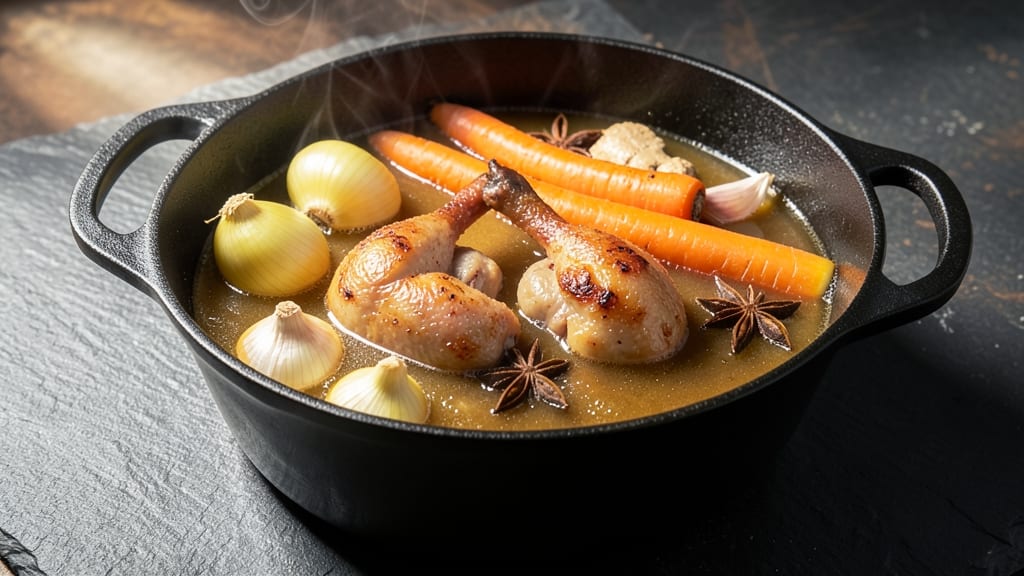
Creating a chicken feet stock recipe transforms humble ingredients into a deeply flavorful foundation for any broth-based dish. The key lies in slow simmering—extracting collagen and gelatin for that signature richness that elevates pho, ramen, or stews to restaurant-quality depth.
I’ve perfected this method over years of testing, ensuring every batch delivers maximum umami without bitterness. This isn’t just stock; it’s the secret weapon behind some of the world’s most beloved soups.
The process begins with thorough cleaning and blanching to remove impurities, followed by a 6-8 hour simmer that unlocks the collagen-rich gelatin from the chicken feet. Aromatics like ginger, star anise, and bay leaves add complexity, while a final strain through cheesecloth ensures a silky-smooth texture.
The result? A golden, gelatinous stock that thickens slightly when chilled, ready to form the backbone of your next culinary masterpiece.
What sets this stock apart is its versatility—use it as a base for pho, ramen, or even braised dishes where a deep, savory flavor is essential. The gelatin content also makes it ideal for thickening soups naturally, eliminating the need for cornstarch or roux.
With proper storage (up to 3 months in the freezer), you’ll always have a pantry staple that transforms ordinary meals into extraordinary ones.
For those new to chicken feet, don’t be intimidated—they’re packed with flavor and far more sustainable than traditional chicken bones. Start with a small batch to build confidence, then scale up as you master the technique.
This stock isn’t just a recipe; it’s a skill that will elevate your cooking for years to come.
Ingredients for chicken feet stock
Transform humble ingredients into restaurant-quality stock with these twelve essential components.
| Ingredient | Amount | Notes |
|---|---|---|
| Chicken Feet 🦵 | 2 lbs | Fresh or frozen, cleaned thoroughly |
| Yellow Onion 🧅 | 1 whole | Quartered, skin on for color |
| Carrots 🥕 | 4 whole | Scrubbed, cut into large chunks |
| Fresh Ginger 🌿 | 2 oz | Unpeeled, sliced into thick rounds |
| Garlic Cloves 🧄 | 6 cloves | Smash lightly to release oils |
| Star Anise Pods 🌟 | 4 whole | Whole pods for easy removal |
| Bay Leaves 🍃 | 2 whole | Dried, standard supermarket quality |
| Cinnamon Sticks 🌳 | 2 whole | 2-inch lengths for aroma |
| Black Peppercorns 🌶️ | 1 tbsp | Crushed lightly in mortar |
| Kosher Salt 🧂 | 1 ½ tsp | Diamond Crystal preferred |
| Cold Water 💧 | 12 cups | Filtered preferred for clarity |
| Cheesecloth 🧵 | 1 sheet | For final straining |
The chicken feet are the cornerstone—opt for fresh or high-quality frozen from Asian markets or specialty butchers. Whole Foods and Costco often carry them pre-cleaned, saving valuable prep time. Avoid any with a strong ammonia odor, as this indicates poor quality. For aromatics, Penzeys Spices carries superior star anise and cinnamon sticks that elevate the complexity. The ginger should be firm with vibrant green skin—no wrinkles or soft spots. Bay leaves should be fragrant when crushed, not brittle or dusty.
No star anise? Anise seeds at double the quantity work as a substitute, though the flavor won't be identical. Substituting frozen chicken feet? Thaw overnight in the fridge—never microwave, as it can create off-flavors. For the onion, yellow or red varieties work equally well, though yellow adds subtle sweetness. Carrots can be swapped for parsnips or celery root if preferred. The cheesecloth is non-negotiable—muslin or cotton works best for straining, while paper filters won't capture the fine gelatin particles that give this stock its signature body.
This stock develops maximum gelatin content after 8 hours of simmering, but the first 6 hours are critical for extracting collagen. Store in glass jars with tight lids in the freezer for up to 3 months, or refrigerate for 1 week. The gelatin will solidify slightly when chilled—simply reheat gently to restore its silky texture. Portion into ice cube trays for convenient single-use servings in future recipes.
Why You'll Love This Recipe
- No Chopping Chaos: I swear by this stock because the prep is actually minimal—just rough-chop the onions, slice the carrots into thick batons, and peel the garlic while the feet simmer. The ginger? A quick zest and a few slices. That’s it. No fancy knife work, no stress.
- Umami Bomb: Between us, the chicken feet alone pack a flavor punch you won’t find in regular stock. Add the charred garlic and ginger, and you’ve got this deep, savory richness that turns bland dishes into something ridiculously good—think pho, ramen, or even a simple soup.
- Stockpile Secret Weapon: This freezes like a dream, so I make a big batch and keep it on hand for lazy weeknights or when company drops by. A splash in rice, a base for curry, or even a quick stir-fry—it’s the unsung hero that makes everything taste homemade.
- Pocket-Friendly Luxury: Honestly, chicken feet are one of the cheapest ways to get restaurant-quality depth in your cooking. A few dollars’ worth of feet, plus veggies from the garden or pantry, and you’ve got stock that costs pennies per serving—but tastes like it came from a Michelin-starred kitchen.
Step-by-step instructions for chicken feet stock
Here's the method for extracting maximum umami and collagen from chicken feet without bitterness.
Prepare and Blanch the Chicken Feet
Begin by thoroughly rinsing the 2 lbs chicken feet under cold water to remove any debris. This preparation ensures a clean flavor profile in your final stock. Place the feet in a large stockpot and cover them with the 12 cups cold water. Bring to a boil over high heat, then immediately reduce to a simmer for 10 minutes. This initial blanching removes impurities and surface proteins that could cloud your stock later.
After simmering, carefully drain the water through a colander, discarding both the liquid and any foam that rises to the surface. Return the cleaned chicken feet to the pot and add fresh 12 cups cold water. This second rinse guarantees clarity and purity in your finished stock. The feet should now be submerged completely, ready for the long extraction process.
Add Aromatics and Simmer for Deep Flavor
Add the quartered 1 whole yellow onion, 4 whole carrots cut into large chunks, 2 oz fresh ginger sliced into thick rounds, and the 6 lightly smashed garlic cloves to the pot. These vegetables form the flavor foundation of your stock. Bring the mixture back to a gentle simmer over medium-low heat, maintaining a temperature between 180°F and 200°F. This controlled heat range is crucial for collagen extraction without breaking down proteins.
After 30 minutes of simmering, add the 4 whole star anise pods, 2 whole bay leaves, 2 whole cinnamon sticks, and the 1 tbsp lightly crushed black peppercorns. These spices contribute complex aromatic layers that elevate the umami profile. Stir gently to distribute the spices evenly throughout the liquid. The stock should develop a rich, golden color and a subtle spiced aroma as it continues to simmer.
Season and Simmer for 8-10 Hours
Add the 1.5 tsp kosher salt to the simmering pot and stir to dissolve completely. This seasoning enhances flavor development during the long cooking process. The stock should now simmer gently for a total of 8-10 hours. This extended cooking time is essential for extracting collagen from the chicken feet, which transforms into gelatin that thickens and enriches the stock.
Periodically skim any foam or impurities that rise to the surface during the first 2 hours of simmering. After this initial period, the stock should remain relatively clear with only minimal skimming required. The aroma should become increasingly rich and complex, with notes of caramelized vegetables and spiced depth. Maintain the simmer without boiling, as higher temperatures can cause proteins to break down and create cloudiness.
Strain and Finish the Stock
Once the stock has simmered for the full 8-10 hours, remove the pot from heat and let it cool slightly for 10 minutes. This cooling period prevents heat shock when transferring to the cheesecloth. Line a large bowl or pitcher with the 1 sheet cheesecloth and place it over another bowl to catch the strained liquid. Carefully ladle the stock through the cheesecloth, pressing gently on the solids to extract maximum flavor without introducing sediment.
The resulting stock should be clear with a deep golden color and rich, umami-forward flavor. It should have a gelatinous consistency when chilled, indicating successful collagen extraction. Store the stock in airtight containers in the refrigerator for up to 5 days or freeze for longer storage. This versatile base enhances soups, stews, and braises with unparalleled depth of flavor.
Pro Tips For Making Chicken Feet Stock
- BLANCH FEET FIRST: Skip the slow simmer start—parboil the chicken feet for 10 minutes in salted water before adding everything else. This loosens the collagen and cuts the cooking time by nearly half. I learned this the hard way after staring at a pot for 6 hours wondering why my stock wasn’t rich enough.
- PEEL GINGER THIN: Use a spoon to scrape off just the pale inner layer of ginger—no need for thick chunks. Thin slices infuse faster and don’t overpower the stock. (Yes, even if you’re impatient like me, resist the urge to chop it roughly.)
- CRUSH GARLIC HARD: Smash garlic cloves with the flat side of your knife before adding them—this releases more flavor without burning. I used to just minced it, but crushed cloves make a real difference in depth.
- STRAIN TWICE: After simmering, strain through a fine-mesh sieve first, then a cheesecloth-lined colander. The second pass catches the tiny collagen bits that make stock silky. (Your future self will thank you for the extra 2 minutes.)
Serving suggestions for chicken feet stock
Pho Garnish Station
Transform your pho into a vibrant, restaurant-quality bowl by setting up a garnish station. I always include sliced jalapeños for heat, bean sprouts for crunch, and Thai basil leaves for freshness.
Add hoisin sauce and sriracha for customizable spice levels. The key is freshness—prepare these components just before serving to maintain texture and flavor. 🌶️
Ramen Upgrade Kit
Elevate your ramen with this chicken feet stock by adding soft-boiled egg halves, chashu pork slices, and menma (fermented bamboo shoots). The gelatin-rich stock clings beautifully to the noodles, creating a silky texture.
I like to finish with scallions and a drizzle of chili oil for extra depth. Serve immediately for the best experience—ramen loses its appeal when reheated.
Stew Thickener
Use this stock as a natural thickener in hearty stews like beef bourguignon or chicken and dumplings. The gelatin content creates a luxurious mouthfeel without cornstarch. Simmer the stock with your stew ingredients for the final 30 minutes of cooking to preserve its clarity.
I often reduce it by 20% before adding to intensify the flavor. The result is a velvety texture that feels indulgent. ✨
Braised Dish Base
Create a luxurious braising liquid by combining this stock with red wine and tomato paste for dishes like braised short ribs or beef stew. The collagen-rich stock helps tenderize the meat while adding depth.
I recommend reducing the stock by half before adding to the braising liquid. The gelatin will help create a glossy, flavorful sauce that clings perfectly to the meat. 💫
Soup Clarifier
For cloudy soups like minestrone or lentil soup, use this stock as a clarifying agent. Strain it through cheesecloth first, then mix 1 cup of the stock with 4 cups of your finished soup.
The gelatin will naturally bind to impurities, creating a clearer broth. I often add a splash to tomato-based soups to brighten their color and enhance their umami profile.
Presentation Tips
When serving dishes made with this stock, focus on visual appeal. Use a clear glass bowl for pho to showcase its golden color. Garnish with edible flowers or lime wedges for a restaurant-worthy touch.
For stews, top with a dollop of crème fraîche or butter to highlight the stock's rich texture. The presentation should reflect the care you put into creating this umami-packed foundation. 💡
Nutrition facts
Frequently asked questions
Why do chicken feet create a richer stock than regular chicken bones?
Chicken feet contain collagen-rich connective tissue that transforms into gelatin during long simmering, creating a thicker, more luxurious texture. Regular bones lack this gelatin content, resulting in a thinner, less velvety broth. The feet's cartilage and skin also contribute to a deeper umami flavor that elevates any dish.
Can I make this stock in a slow cooker instead of a stovetop?
Use the same ingredients and simmer on low heat for 10-12 hours instead of 8-10 hours. The slow cooker's gentle heat is perfect for collagen extraction. Just remember to skim impurities during the first 2 hours and strain through cheesecloth for the best clarity.
What if my stock turns cloudy during cooking?
Cloudiness usually means proteins broke down from boiling. Keep the heat at a gentle simmer (180-200°F) and skim foam regularly. For extra clarity, strain through cheesecloth twice or add 1 egg white per quart during the final 30 minutes of cooking—it binds impurities naturally.
How do I store and reheat this stock?
Store in airtight containers in the fridge for 5 days or freeze for 3 months. To reheat, warm gently on low heat or microwave until steaming (never boiling). For soups, add cold stock to prevent curdling proteins. The gelatin will re-form when chilled, giving that signature silky texture.
Can I substitute chicken feet with other collagen-rich ingredients?
For a similar effect, use pork knuckles or beef marrow bones (both rich in gelatin). However, chicken feet offer a unique umami depth. If using substitutes, increase simmering time to 12 hours for maximum collagen extraction. The flavor profile will differ slightly but still deliver a rich, velvety stock.