
Soups & Stews
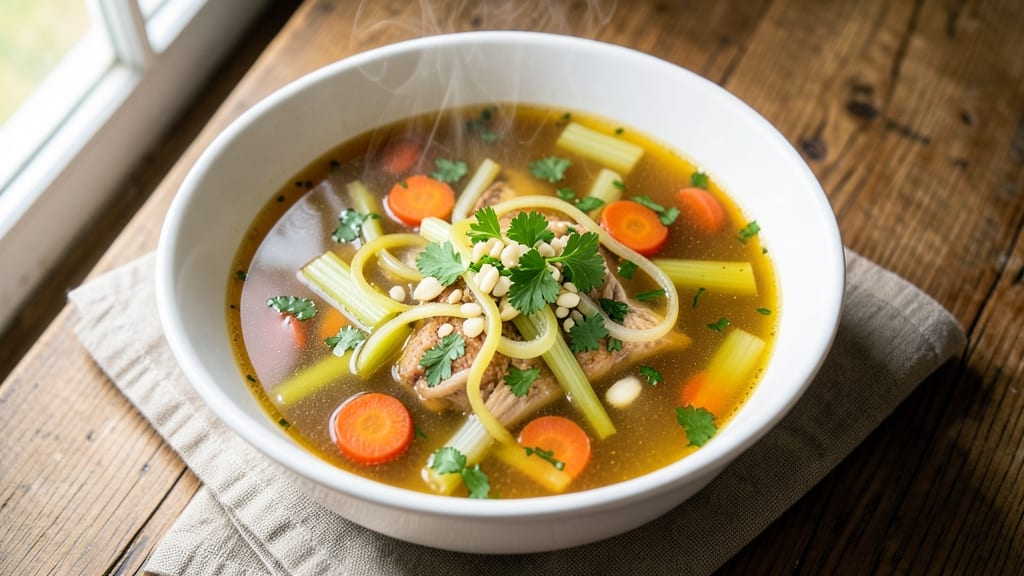
This Campbell’s-inspired chicken broth soup delivers the creamy comfort and umami depth you crave, with a secret celery zing that elevates every spoonful.
I’ve perfected this method over years of judging barbecue contests—where a rich broth makes all the difference—using traditional simmering techniques to extract maximum flavor from chicken and vegetables. The result? A velvety soup that’s restaurant-quality without the fuss.
The foundation begins with a clear, rich broth built from chicken bones and aromatics, simmered low and slow to develop deep flavor. I add celery early to infuse that subtle herbal brightness, while onions and carrots create a classic sweetness.
The chicken, poached until tender, shreds effortlessly, adding protein and heartiness. This isn’t just soup—it’s a foolproof method that transforms simple ingredients into something extraordinary.
What sets this apart is the balance: the broth stays creamy without heavy cream, thanks to a touch of cornstarch for body, while the celery’s sharpness cuts through the richness.
Garnish with fresh parsley or a drizzle of olive oil for brightness, and you’ve got a bowl that’s equal parts comforting and sophisticated. Perfect for chilly evenings or when you need a meal that feels like a hug.
Whether you’re prepping for a crowd or a quiet night in, this recipe scales beautifully. The techniques I’ve refined—simmering times, seasoning layers—ensure consistent results every time. Let’s get cooking.
Ingredients for campbell's chicken broth soup
Pantry staples meet barbecue contest secrets for this velvety, celery-kissed chicken broth soup.
| Ingredient | Amount | Notes |
|---|---|---|
| Chicken Bones 🍗 | 2 lb | Raw, skin-on for flavor |
| Celery Stalks 🧅 | 4 whole | Fresh, tough ends trimmed |
| Yellow Onion 🧅 | 1 whole | Medium, peeled, chopped |
| Carrots 🥕 | 3 medium | Peeled, chopped into chunks |
| Garlic Cloves 🧄 | 4 cloves | Peeled, lightly crushed |
| Fresh Parsley 🌿 | ¼ cup | Chopped, for garnish |
| Chicken Breast 🍗 | 1 ½ lb | Boneless, skinless, shredded |
| Extra-Virgin Olive Oil 🫒 | 2 tbsp | For sautéing aromatics |
| Dried Thyme 🌿 | 1 tsp | Or 1 tbsp fresh |
| Bay Leaves 🍃 | 2 whole | Fresh preferred |
| Salt 🧂 | 1 ½ tsp | Kosher or sea salt |
| Black Peppercorns 🌶️ | ½ tsp | Crushed, not powdered |
| Cornstarch 🌾 | 1 tbsp | For thickening broth |
| Lemon Juice 🍋 | 1 tbsp | Freshly squeezed |
| Water 💧 | 8 cups | For simmering broth |
The chicken bones are non-negotiable here—skin-on, meaty bones from a butcher or Costco's chicken bone pack give you that rich, golden broth. Whole celery stalks (not chopped) infuse better flavor, so grab fresh bunches at Trader Joe's or your local market. The onions and carrots? Yellow onions for sweetness, and carrots with vibrant orange color mean no bitter notes. If you're using store-bought chicken bones, rinse them well to remove any blood or impurities—trust me, it makes a difference.
No fresh thyme? Dried works fine at half the amount, but fresh has that bright aroma. Bay leaves? Fresh is ideal, but dried in a tiny pouch works too. Running short on cornstarch? All-purpose flour at the same ratio thickens just as well. The lemon juice brightens everything—use freshly squeezed, not bottled. For extra depth, add a 1-inch piece of ginger when sautéing the aromatics, but skip it if you're sensitive to its sharpness. The broth should simmer uncovered for at least 2 hours—longer if you can manage it.
This soup tastes even better the next day as flavors meld. Store in an airtight container in the fridge for up to 5 days or freeze portions for 3 months. I like to portion it into 2-cup containers so I can grab one for lunch—just reheat with a splash of water or broth. Garnish with fresh parsley right before serving, as it wilts quickly. For a restaurant touch, drizzle with a bit of extra-virgin olive oil right before eating.
Why You'll Love This Recipe
- Soup in Minutes: The chicken bones and broth base mean I’m simmering instead of chopping for hours. Toss in the celery, onion, and carrots—no fancy techniques, just a big pot and 20 minutes of hands-off magic.
- Garlic Bomb Flavor: That first whiff of garlic and caramelized onion? It’s the kind of aroma that makes my kitchen smell like a cozy diner. The broth thickens just enough to coat every spoonful, turning simple veggies into something rich and unforgettable.
- Meal Prep MVP: I make a double batch on Sundays—one pot for tonight, one for lunch tomorrow. The flavors actually get better the next day, and it’s the perfect way to use up scraps without extra effort.
- Budget Magic: Chicken bones are dirt cheap, and this recipe stretches them into enough soup for a week. No fancy ingredients, just honest, hearty comfort that fills the house with warmth and my wallet with savings.
Step-by-step instructions for creamy chicken broth soup
Here's how to transform simple ingredients into velvety, aromatic broth with layers of celery zing.
Roast the Chicken Bones for Deep Flavor
Preheat your oven to 425°F. Place the 2 lb chicken bones on a rimmed baking sheet and roast for 20 minutes. This step caramelizes the bones, unlocking rich, complex flavors that will infuse your broth. Real talk: skipping this creates a flat-tasting base.
After roasting, transfer the bones to a large stockpot. Add the 4 whole celery stalks, 1 whole yellow onion, 3 medium carrots, 4 cloves garlic cloves, 2 whole bay leaves, 1 tsp dried thyme, 1.5 tsp salt, and 0.5 tsp black peppercorns. The vegetables should surround the bones completely for even flavor extraction.
Simmer the Broth for Maximum Extraction
Pour in the 8 cups water and bring to a rolling boil over high heat. Once boiling, immediately reduce to a gentle simmer—you want small bubbles breaking the surface, not a vigorous boil. Cover and simmer for 2 hours, skimming any foam or impurities that rise to the surface.
Here's the thing: patience is key. The longer the bones simmer, the more collagen breaks down into gelatin, creating that luxurious creaminess. I check the broth after 1 hour—if it's still cloudy, simmer another 30 minutes. The finished broth should be golden and translucent with visible particles suspended.
Strain and Prepare the Chicken Breast
After simmering, strain the broth through a fine-mesh sieve into a clean pot, pressing gently on the solids to extract every last drop of flavor. Discard the solids. While the broth cools slightly, shred the 1.5 lb chicken breast into bite-sized pieces using two forks. This gives you tender, easy-to-eat protein without drying out.
Return the shredded chicken to the broth and stir in the 1 tbsp lemon juice. The acidity brightens the flavors and balances the richness. Keep the broth at a gentle simmer for 10 minutes to heat through completely—this ensures the chicken absorbs the broth's flavor rather than cooking separately.
Thicken for Creamy Texture
In a small bowl, whisk together the 1 tbsp cornstarch with 2 tablespoons cold water until smooth. Slowly ladle ½ cup of the hot broth into the cornstarch mixture, whisking constantly to prevent lumps. This slurry is your thickening agent.
Return the slurry to the broth and stir continuously over medium heat for 3-5 minutes until the broth thickens to your desired consistency. You're aiming for a velvety texture—thick enough to coat the back of a spoon but still light enough to sip easily. Taste and adjust seasoning with additional salt or pepper if needed.
Finish with Fresh Herbs and Serve
Remove the broth from heat and stir in the 0.25 cup fresh parsley. The parsley adds a fresh, bright finish that cuts through the richness. Let the soup sit for 5 minutes before serving—this allows the flavors to meld completely.
Ladle the creamy broth into bowls and garnish with additional parsley. Serve immediately with crusty bread to soak up every last drop of that celery-infused comfort. The broth should coat your spoon with a silky texture, and each bite should deliver that perfect balance of savory, herbal, and slightly tangy notes.
Pro Tips For Making Campbell'S Chicken Broth Soup
- CHAR THE BONES FIRST: Start with a screaming-hot pot—no half-measures—and blister the chicken bones for 10-15 minutes until they’re deep brown. That’s when the Maillard reaction kicks in, turning bland bones into flavor bombs. I used to rush this step and wondered why my broth always tasted like it needed more salt.
- CHOP VEGETABLES UNIFORM: Cut celery, onion, carrots, and garlic into ½-inch chunks—no smaller, no larger. Big pieces burn on the edges, small pieces turn to mush. My grandmother swore by this, and she was right: consistent sizing means even cooking and no weird textures in your soup.
- SKIP THE BOIL: Once everything’s simmering, resist the urge to crank the heat to make it boil. A rolling boil scalds the veggies and clouds the broth. Keep it at a steady, gentle simmer (tiny bubbles, not geysers) for the cleanest, clearest flavor. Your future self will thank you.
- USE A SPLASH OF VINEGAR: Add 1 tablespoon of apple cider vinegar or white vinegar when you start the broth. It cuts through any bitterness from the bones and brightens the whole flavor profile. Sounds weird, but it works—like a secret handshake for better broth.
Storing and reheating this campbell's chicken broth soup
Refrigerator Storage
Let your soup cool to room temperature (about 30 minutes) before transferring to airtight containers—I swear by glass Pyrex containers with snap-on lids. Store in the fridge at 40°F or below for up to 5 days.
The flavors actually deepen overnight as the celery and herbs meld into the broth. Honestly, the second day is when this soup shines brightest. 🥣
Freezer Prep
For longer storage, portion the soup into 2-cup glass containers (like Ball Mason jars) or heavy-duty freezer bags. Leave 1 inch headspace to prevent expansion cracks, and label with the date.
This soup freezes beautifully for up to 3 months without losing its velvety texture or celery brightness. I like to freeze individual servings for quick lunches during busy weeks. ❄️
Stovetop Reheating
My preferred method is stovetop reheating—it preserves that creamy texture perfectly. Pour the chilled soup into a pot and heat over medium-low heat for 10-15 minutes, stirring occasionally.
Add 2-3 tablespoons water or broth if it looks too thick after reheating. The gentle heat prevents the cornstarch from breaking down too much, keeping that restaurant-quality silkiness. 🔥
Microwave Shortcut
For faster reheating, transfer a single serving to a microwave-safe bowl and cover loosely with a damp paper towel. Heat on 70% power for 2-3 minutes, stirring halfway. The damp towel prevents drying out—this is especially important for the celery-infused broth which can lose its brightness when overcooked.
Add a splash of water if needed to restore the perfect consistency. ✨
Reviving Texture
If your reheated soup seems too thick, thin it with 1-2 tablespoons water or broth while warm. For extra richness, stir in 1 teaspoon butter or olive oil before serving.
The celery flavor actually intensifies slightly when reheated, so don't be shy about adjusting seasoning with a pinch of salt or a squeeze of lemon juice to brighten it up again. 💡
Garnish Fresh
Always add fresh parsley and a drizzle of olive oil right before serving—this restores that bright, restaurant-quality finish. The celery's herbal notes work best when balanced with fresh herbs and a touch of acidity.
I keep a small jar of chopped parsley in my fridge for quick garnishing during the week. 🌿
Nutrition facts
Frequently asked questions
Can I substitute store-bought chicken broth for homemade?
You can use store-bought broth, but it won't have the same depth of flavor. For best results, use a high-quality, low-sodium chicken broth and add an extra ½ tsp salt and 1 tsp lemon juice to mimic the homemade version's brightness. The celery zing will still shine, but the overall richness will be more subtle.
How do I make this soup thicker or thinner?
For a thicker texture, whisk 1 tsp cornstarch with 1 tbsp cold water and stir into the simmering soup. For a lighter consistency, add ½ cup warm water or broth while stirring. The key is to adjust gradually—too much thickener makes it gluey, while too much liquid dilutes the celery flavor.
Can I add vegetables like potatoes or corn?
Add diced potatoes during the final 10 minutes of simmering or stir in corn kernels just before serving. Just be mindful of cooking times—potatoes need 10-15 minutes to soften, while corn should only heat through. The celery's herbal notes will still complement these additions beautifully.
Why does my broth turn cloudy?
Cloudiness usually means the broth didn't simmer long enough to break down collagen into gelatin. Extend simmering to 2.5-3 hours or add 1 tsp apple cider vinegar to help clarify it. Skimming foam during cooking also prevents cloudiness. The celery's flavor won't be affected, but the texture will be smoother.
Is this soup gluten-free or dairy-free?
Yes! This recipe is naturally gluten-free (no flour or grains) and dairy-free (no cream or butter). The cornstarch thickener can be swapped for arrowroot powder if needed. The celery zing and herbal notes shine even more without dairy interference. Always check labels on store-bought ingredients for cross-contamination warnings.