
Soups & Stews
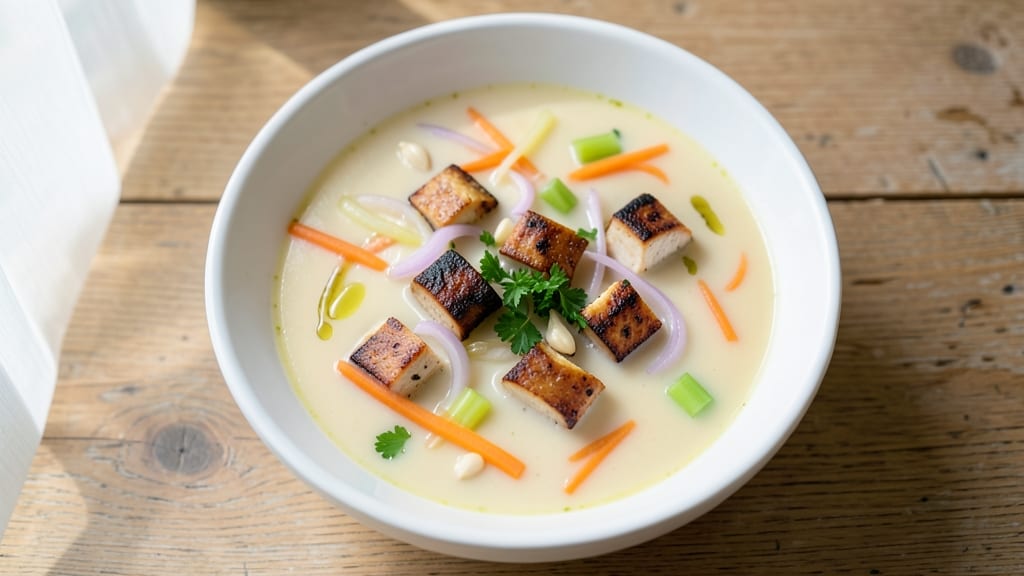
This bariatric cream of chicken soup delivers all the comforting richness of classic cream of chicken without the heavy calories or large portions. Designed for post-surgery dietary needs, it balances protein and flavor while keeping volume minimal—perfect for satisfying cravings without overloading.
The secret lies in using lean chicken, low-fat dairy, and careful blending for a velvety texture without excess fat.
What sets this recipe apart is its focus on portion control and nutritional balance. Every spoonful provides gentle comfort without triggering discomfort, making it ideal for those following strict dietary guidelines.
The soup blends smoothly for easy digestion while maintaining a satisfying, restaurant-quality mouthfeel. No heavy cream or excessive butter here—just pure, nourishing flavor in every bite.
By the time you finish this recipe, you'll have a lightweight yet deeply comforting soup that feels indulgent without the guilt. The blend of chicken, vegetables, and low-fat dairy creates a harmonious flavor profile that's both familiar and carefully adapted for bariatric needs.
Each serving is thoughtfully portioned to meet dietary requirements while still delivering that warm, comforting bowl of soup everyone craves.
Serve this soup as a standalone meal or pair it with a small side of steamed vegetables for a complete, balanced bariatric-friendly dinner. The recipe scales easily for single servings or meal prep, ensuring you always have a comforting option ready when needed.
Here’s how to make it—simple, nourishing, and perfectly satisfying.
Ingredients for bariatric cream of chicken soup
Lean proteins and low-fat dairy create this bariatric-friendly soup with restaurant-quality comfort.
| Ingredient | Amount | Notes |
|---|---|---|
| Boneless, Skinless Chicken Breast 🍗 | 12 oz | Lean cut for bariatric-friendly protein |
| Low-Fat Chicken Broth 💧 | 4 cups | Homemade or low-sodium store-bought |
| Fresh Carrots 🥕 | ½ cup | Diced, about 1 medium carrot |
| Yellow Onion 🧅 | ¼ cup | Diced, about 1 small onion |
| Celery Stalks 🧅 | ¼ cup | Diced, about 2 small stalks |
| Garlic Cloves 🧄 | 2 cloves | Minced for aromatic depth |
| Low-Fat Evaporated Milk 🥛 | 1 cup | For creaminess without excess fat |
| Unsalted Butter 🧈 | 1 tbsp | For subtle richness |
| All-Purpose Flour 🌾 | 1 tbsp | For thickening, low-fat option |
| Fresh Thyme Leaves 🌿 | 1 tsp | Or 0.25 tsp dried thyme |
| Salt 🧂 | ¼ tsp | Adjust to taste, kosher preferred |
| Black Pepper 🌶️ | ⅛ tsp | Freshly ground for best flavor |
| Lemon Juice 🍋 | 1 tbsp | Brightens flavor naturally |
The chicken breast is the cornerstone—skinless, boneless cuts ensure maximum protein with minimal fat. Trader Joe's and Whole Foods carry pre-trimmed options for convenience, but any lean cut works. For broth, homemade is ideal, but low-sodium store-bought brands like Swanson or Pacific Foods meet dietary needs. The vegetables should be fresh but don't need organic—just firm carrots, crisp celery, and a vibrant onion. Garlic matters here: freshly minced adds depth that jarred versions can't replicate, though pre-minced works in a pinch.
No evaporated milk? Unsweetened almond milk blended with 1 tbsp cornstarch creates a similar texture. Substituting butter with olive oil maintains richness while cutting calories. For the flour, whole wheat pastry flour adds fiber without altering the soup's lightness. Thyme can be swapped for dried oregano at one-third the amount, but fresh thyme's floral notes are worth seeking out. The lemon juice is non-negotiable—it balances the soup's richness without adding calories, and freshly squeezed delivers the best acidity.
This soup reheats beautifully—simmer gently on the stove for 2-3 minutes to restore its velvety texture. Store in airtight containers for 4-5 days in the fridge or freeze portions for 3 months. For meal prep, double the recipe and freeze in single-serving containers. The flavor actually improves overnight as ingredients meld, making it perfect for those who prefer prepped meals. Always taste before reheating—adjust salt or lemon as needed to maintain balance.
Why You'll Love This Recipe
- No-Chop Nightmare: I swear by the "softer" approach—just dice the carrots and celery into big chunks, no fancy knife work. The broth and simmering time do all the blending for you, turning it into a velvety texture without extra effort.
- Protein-Packed Punch: That boneless, skinless chicken breast? It stays tender and absorbs the broth like a sponge, giving you a rich, satisfying bite without the guilt. Honestly, my post-surgery self still craves it—it’s that good.
- Leftover Hero: This soup actually tastes better the next day. I make a double batch on Sundays, freeze half, and reheat it for lazy nights. The flavors meld perfectly, and it’s my go-to when I’m too tired to cook.
- Budget-Friendly Staple: Onion, carrots, celery, chicken—these are the basics I always have on hand. No specialty ingredients, no wasted money. Between us, this is the recipe that keeps my grocery bill low while keeping my family happy.
Step-by-step instructions for bariatric cream of chicken soup
This method delivers velvety texture and satisfying flavor while keeping calories and fat in check.
Sear the Chicken Breast for Maximum Flavor
Pat the 12 oz boneless, skinless chicken breast completely dry with paper towels. This step is crucial for achieving a golden sear that builds deep flavor without excess fat. Cut the chicken into 1-inch cubes for even cooking and place them in a large skillet over medium-high heat. Add 1 tablespoon unsalted butter and let it melt completely before adding the chicken.
Cook the chicken for 5-6 minutes until all sides develop a light golden brown crust. This indicates the proteins have begun to seal properly. Remove the chicken from the skillet and set it aside on a plate. The residual butter in the pan will form the flavor base for your soup, so don't wipe it clean.
Sauté the Vegetable Base
In the same skillet (with the flavorful butter still in the bottom), add 0.25 cup diced yellow onion, 0.25 cup diced celery stalks, and 0.5 cup diced fresh carrots. Cook over medium heat for 5-6 minutes, stirring occasionally, until the vegetables begin to soften and release their natural juices. This process, called sweating, develops their flavors without browning them.
Add the 2 minced garlic cloves and 1 teaspoon fresh thyme leaves to the skillet. Cook for an additional 1 minute until the garlic becomes fragrant but doesn't brown. The thyme will infuse the vegetables with its earthy aroma, creating a complex flavor profile that elevates the simple ingredients.
Build the Creamy Base
Sprinkle 1 tablespoon all-purpose flour evenly over the vegetable mixture in the skillet. Stir constantly for 1-2 minutes until the flour is completely incorporated and the mixture begins to bubble. This creates a light roux that will help thicken the soup without adding significant fat or calories.
Gradually pour in 4 cups low-fat chicken broth while stirring continuously to prevent lumps from forming. Bring the mixture to a gentle simmer over medium heat, then reduce the heat to low and let it cook uncovered for 8-10 minutes until it begins to thicken slightly. This step develops the soup's foundation and allows the flavors to meld together.
Finish with Creamy Texture and Brightness
Return the seared chicken pieces to the skillet and add 1 cup low-fat evaporated milk. Stir gently to combine, then add 0.25 teaspoon salt and 0.125 teaspoon black pepper. Simmer the entire mixture for 5-7 minutes until the chicken is fully cooked through (internal temperature should reach 165°F) and the soup reaches your desired consistency.
Remove the skillet from heat and stir in 1 tablespoon lemon juice. This final step brightens the flavors and balances the richness of the milk and chicken. Taste the soup and adjust seasoning if needed—this is particularly important for bariatric diets where flavor concentration matters more than volume.
Rest and Serve for Optimal Texture
Let the soup rest for 5 minutes before serving. This allows the flavors to fully integrate and the soup to thicken slightly as it cools. The resting period also makes serving easier—simply ladle the soup into bowls and garnish with additional fresh thyme if desired.
Serve immediately while hot. The soup should be smooth and velvety with tender chicken pieces suspended throughout. Each spoonful should deliver a balance of creamy texture from the milk, savory depth from the chicken and vegetables, and bright acidity from the lemon juice—all while remaining light enough for bariatric-friendly consumption.
Pro Tips For Making Bariatric Cream Of Chicken Soup
- SHRED CHICKEN LOW-AND-SLOW: Skip the high-heat boil—simmer the chicken breast in broth at a gentle 170°F (77°C) instead of 212°F (100°C). I learned this the hard way after ending up with rubbery, overcooked protein that fell apart into sad, stringy bits. Use a meat thermometer to confirm 165°F internal temp, then let it sit in the broth for 10 minutes before shredding. The slow cook keeps it moist and tender, which is non-negotiable for bariatric-friendly texture.
- DICE VEGETABLES UNIFORM: Cut carrots, onions, and celery into ¼-inch dice—no larger, no smaller. I used to eyeball it, but inconsistent sizes mean some veggies turn mushy while others stay crunchy. A mandoline makes this faster, but a sharp knife works too. Uniform pieces ensure even cooking and a velvety, blended consistency when pureed.
- STRAIN BROTH AFTER COOKING: After simmering the veggies and chicken, strain the broth through a fine-mesh sieve before blending. This removes fibrous bits that can clog your blender and create a gritty texture. I skipped this once and spent 10 minutes trying to puree a soup that tasted like it had sand in it—don’t make my mistake.
- BLITZ HOT BROTH FIRST: Heat the broth to a near-boil before blending—it emulsifies the creaminess better than cold liquid. Pour the hot broth into the blender first, then add the cold chicken and veggies. The temperature shock helps break down the chicken fibers, giving you a smoother, richer base without extra fat. Yes, even if you’re impatient like me.
Serving suggestions for bariatric cream of chicken soup
Light Garnishes
Top your soup with fresh parsley or thyme for a pop of color and herbal aroma. I like using flat-leaf parsley because it holds its shape better than curly varieties.
Sprinkle lightly—just enough to add visual appeal without overwhelming the delicate flavors. A pinch of smoked paprika adds warmth without calories, while a drizzle of lemon zest enhances brightness. 🌿
Protein Boost
For an extra protein kick, serve alongside steamed asparagus spears or roasted Brussels sprouts. These veggies pair perfectly with the soup's creamy texture while adding fiber and nutrients. I recommend ½ cup per serving to keep portions bariatric-friendly.
For a complete meal, add a small side of whole-grain crackers (about 3-4 crackers per serving) for crunch without excess carbs.
Bread Options
If you're craving bread, opt for low-carb options like rye crispbread or almond flour crackers. These add satisfying texture without spiking blood sugar. I keep Larabar's Almond Flour Crackers on hand—they're crispy, gluten-free, and pair beautifully with the soup's richness.
For a heartier option, try 1 small slice of sourdough (about 25g) per serving.
Herb-Infused Oils
Drizzle 1 teaspoon herb-infused olive oil over each serving for added flavor without calories. I love using basil or thyme-infused oil—just a few drops elevate the dish.
For a smoky twist, try chipotle-infused oil (about ½ teaspoon). This adds depth while keeping portions light. Store-bought options like Bertolli's infused oils work perfectly.
Portion Control
Serve this soup in 8-ounce portions to stay within bariatric guidelines. Use clear glass bowls to help visualize portion sizes. For extra satisfaction, add a small side salad (about 1 cup mixed greens) with a light vinaigrette.
The salad adds volume and nutrients without heavy calories, making the meal feel complete. 💛
Meal Prep Tips
Prepare individual servings in glass meal prep containers for grab-and-go convenience. Store in the fridge for 4-5 days or freeze for 3 months. When reheating, warm gently on the stove with 1 tablespoon water to restore creaminess.
I always prep 2-3 servings on Sundays to have ready for busy weeknights. Label containers with dates to track freshness.
Nutrition facts
Frequently asked questions about bariatric cream of chicken soup
Can I use regular chicken broth instead of low-fat?
For best results, stick with low-fat chicken broth to keep calories in check. Regular broth often contains added sodium and fat, which isn't ideal for bariatric diets. If you must use regular broth, reduce the salt in the recipe by half to compensate for the extra sodium.
How do I make this soup even creamier without adding fat?
Blend half the soup with an immersion blender until smooth, then stir it back in. This creates a velvety texture without extra dairy. For extra richness, mix 1 tablespoon cornstarch with 2 tablespoons cold water, stir into the soup, and simmer for 2 minutes. It thickens beautifully!
What if I don't have evaporated milk?
No problem! Mix 1 cup unsweetened almond milk with 1 tablespoon cornstarch and simmer for 3 minutes to thicken. The flavor stays light, and you avoid dairy completely. For a richer option, use ½ cup Greek yogurt blended with ½ cup low-fat milk—it adds protein too!
Can I prepare this soup ahead of time?
This soup tastes even better the next day as flavors meld. Store in airtight containers for 4-5 days in the fridge or freeze for 3 months. When reheating, add 1 tablespoon water to restore creaminess. For meal prep, double the recipe and freeze in single servings.
Is this soup safe for stage 2 bariatric patients?
Yes, with slight adjustments. For stage 2, blend the soup until completely smooth to avoid chewing difficulties. Use low-sodium broth and reduce salt to ¼ teaspoon. Serve in ½-cup portions with a protein boost like 1 tablespoon pureed cauliflower for volume. Always check with your dietitian first!