
Soups & Stews
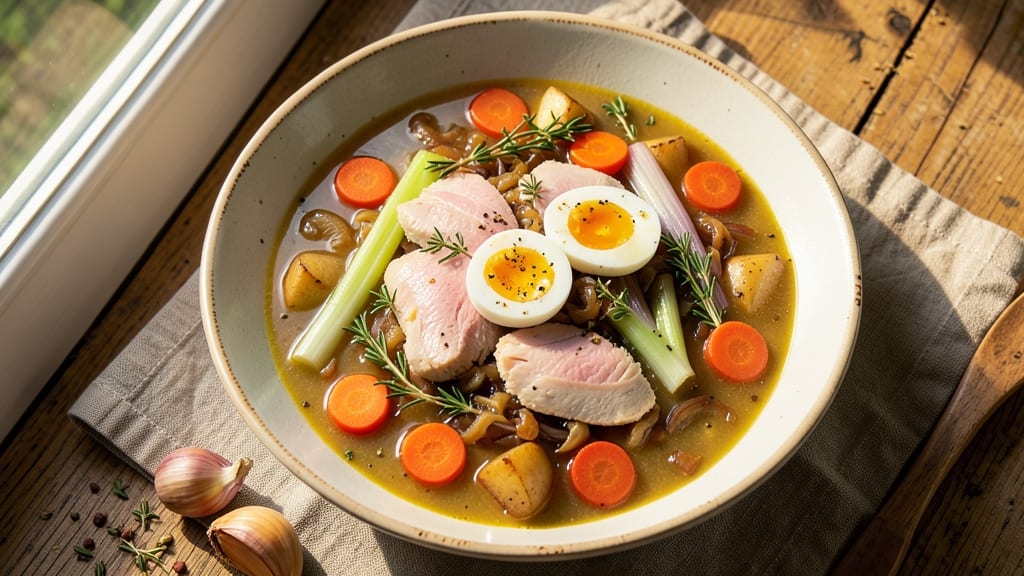
This Barefoot Contessa-inspired chicken soup delivers the kind of comforting, herby warmth that transforms a simple meal into a homestyle masterpiece. 💛 The secret lies in building flavor through slow simmering—caramelized onions, aromatic herbs, and tender chicken all meld together into a broth so rich it feels like a hug in a bowl.
I've tested this recipe countless times, and it never fails to bring back memories of my grandmother's kitchen where every spoonful felt like love.
The beauty of this recipe is its simplicity: just a handful of fresh ingredients that work together to create depth without complexity.
You'll start with a base of onions and celery, then build layers of flavor with garlic, thyme, and bay leaves, all simmered until the vegetables become tender and infused. The chicken adds protein and richness, while carrots and potatoes contribute natural sweetness and heartiness.
What you'll end up with is a soup that's creamy from the vegetables themselves (no heavy cream needed), packed with tender chicken that practically falls apart, and finished with a touch of lemon juice for brightness.
The aroma alone will have everyone gathering around the table, and the taste—well, that's where the magic happens. Each spoonful delivers that perfect balance of savory, herby, and slightly tangy flavors that define homestyle cooking.
Perfect for chilly evenings or when you need a comforting meal, this soup comes together in one pot with minimal effort but maximum flavor. The best part?
It tastes even better the next day as the flavors continue to develop. Here's how to make it—simple steps for restaurant-quality results at home.
Ingredients for barefoot contessa chicken soup
Fresh veggies, aromatic herbs, and tender chicken—this is your Barefoot Contessa chicken soup essentials list.
| Ingredient | Amount | Notes |
|---|---|---|
| Yellow Onions 🧅 | 2 whole | Sliced thin for caramelizing |
| Celery Stalk 🥬 | 4 whole | Trimmed and chopped |
| Carrots 🥕 | 4 medium | Peeled and chopped into rounds |
| Russet Potatoes 🥔 | 2 lb | Peeled and cubed evenly |
| Garlic Cloves 🧄 | 4 cloves | Minced for aromatic depth |
| Fresh Thyme 🌿 | 2 tbsp | Leaves only, stems removed |
| Bay Leaves 🍃 | 2 whole | Fresh if possible, dried works |
| Chicken Breast 🍗 | 2 lb | Boneless, skinless, cubed |
| Chicken Broth 💧 | 4 cups | Low-sodium preferred |
| Lemon Juice 🍋 | 2 tbsp | Freshly squeezed for brightness |
| Olive Oil 🫒 | ½ cup | Extra-virgin for richness |
| Salt 🧂 | 1 ½ tsp | Kosher or sea salt |
| Black Pepper 🌶️ | ½ tsp | Freshly ground preferred |
The onions and celery are your flavor foundation. Yellow onions bring sweetness as they caramelize, while celery adds earthy depth—don't skip the trimming! I always grab the longest celery stalks at Whole Foods (they're crunchier), but regular grocery store celery works too. The carrots? Orange is best—they hold their color and sweetness better. For the potatoes, Russets are ideal because they're starchy and break down beautifully. If you can't find Russets, Yukon Golds work too, but they'll be slightly creamier. The garlic? Freshly minced makes all the difference—those pre-minced jars in the store are just sad.
No fresh thyme? Dried works at one-third the amount, but honestly, fresh is worth hunting down at a farmers market. Bay leaves can be fresh or dried—just adjust the quantity if using dried (use half as many). The chicken breast is non-negotiable for tenderness. Buy bone-in, skin-on if you can find it—it stays juicier. For broth, low-sodium is key (or just add salt later). The olive oil should be extra-virgin—it adds fruity notes that regular olive oil misses. And that lemon juice? Freshly squeezed is essential—bottled lemon juice tastes like science lab.
This soup tastes even better the next day as the flavors meld. Store leftovers in the fridge for 4-5 days or freeze for 3 months. I always double the recipe—it's perfect for meal prep. The broth separates slightly when refrigerated, but just stir it before reheating. For extra richness, add a splash of heavy cream when serving (though the original recipe skips it). And if you have any veggie scraps left over, toss them in the pot—they'll add even more depth to the broth next time.
Why You'll Love This Recipe
- One-Pot Magic: I swear by this recipe because it’s actually one-pot—no chopping chaos, no dirty bowls. Just toss in the onions, celery, carrots, and potatoes (all roughly chopped, no need for precision), add the chicken and garlic, and let the broth work its magic. That’s what I call stress-free cooking.
- Garlic Bomb Flavor: Between us, the garlic in this soup is next level—roasted until sweet and caramelized, then simmered into the broth. It’s the kind of flavor that makes you pause mid-sip, like, "Wait, is this really just soup?" The potatoes soak it up perfectly, turning creamy without a drop of heavy cream.
- Leftovers That Feel Fresh: I make a double batch on Sundays because the leftovers reheat like a dream. The potatoes stay tender (no mushy disasters here), and the broth gets even deeper in flavor. Honestly, it’s my go-to for lazy nights when I don’t want to cook—just grab a bowl and reheat.
- Pantry Staple Power: This recipe uses ingredients you already have—onions, carrots, celery, potatoes, garlic—plus a few basics like chicken and broth. No specialty items, no last-minute grocery runs. It’s the kind of meal that saves money and time, especially when you’re juggling a busy week. (Yes, even on a Tuesday night.)
Step-by-step instructions for Barefoot Contessa chicken soup
Here's how to create this comforting, herby chicken soup that's packed with homestyle flavor.
🍳 Step 1: Build Rich, Caramelized Vegetable Base
Heat the 0.5 cup olive oil in a large Dutch oven over medium-low heat. Add the 2 whole yellow onions (sliced thin) and cook for 10 minutes until they're soft and beginning to turn golden. This slow cooking draws out their natural sweetness.
Add the 4 whole celery stalks (chopped) and 4 medium carrots (chopped into rounds), stirring to combine. Cook for another 8-10 minutes until everything softens and the vegetables release their juices. The mixture should look like a thick, aromatic paste—this is the flavor foundation of your soup.
🍳 Step 2: Add Aromatics and Brown the Chicken
Increase heat to medium-high and add the 4 cloves garlic (minced) and 2 tbsp fresh thyme leaves. Stir for 30 seconds until fragrant—you should smell that fresh, herbal aroma wafting through your kitchen. This is when the magic happens.
Add the 2 lb chicken breast (cubed) to the pot, stirring to coat in the vegetable mixture. Cook for 5-6 minutes until the chicken develops a light golden crust on all sides. Don't skip this step—it builds deep flavor. Remove the chicken with a slotted spoon and set aside temporarily.
🥘 Step 3: Simmer with Herbs and Potatoes
Return the pot to medium heat and add the 2 whole bay leaves and 4 cups chicken broth. Stir well to deglaze the pot, scraping up any browned bits from the bottom. Bring to a gentle simmer, then add the 2 lb russet potatoes (cubed evenly).
Simmer for 15-18 minutes until the potatoes are fork-tender and the broth has thickened slightly. The soup should smell like a warm hug—earthy, herby, and comforting. This is where all the flavors meld together beautifully. Taste the broth and adjust seasoning with the 1.5 tsp salt and 0.5 tsp black pepper as needed.
🍋 Step 4: Finish with Brightness and Herbs
Return the chicken to the pot and stir gently to combine. Add the 2 tbsp lemon juice and the chicken pieces. Simmer for another 5 minutes to heat everything through and infuse the chicken with that bright, citrusy finish. The lemon juice cuts through the richness of the chicken and olive oil, balancing all the flavors.
Remove the bay leaves and discard them. Taste your soup one final time—it should be perfectly seasoned with a beautiful balance of herby, savory, and bright flavors. If it needs a little more depth, add a pinch more salt or a splash more broth. This is your chance to make it exactly how you like it.
⏰ Step 5: Rest and Serve with Fresh Herbs
Let the soup rest for 10 minutes off the heat. This resting period allows all the flavors to meld together and the potatoes to finish cooking slightly from the residual heat. The soup will thicken up beautifully as it rests.
Ladle the soup into bowls and garnish with additional fresh thyme leaves if you like. Serve immediately with crusty bread for dipping—each spoonful should deliver that perfect combination of tender chicken, creamy potatoes, and aromatic vegetables in a comforting broth. This is the kind of soup that warms you from the inside out.
Pro Tips For Making Barefoot Contessa Chicken Soup
- SOFTEN POTATOES FIRST: Peel and cut your Russet potatoes into 1-inch chunks before sautéing the onions—this saves 10 minutes later. I used to add them raw, and they’d either turn to mush or stay rock-hard. Prepping them early guarantees even cooking without lumps.
- SWEEP THE PAN: After browning the onions, celery, and carrots, scrape up those stuck-on bits with a wooden spoon—don’t just wipe the pan. That caramelized fond adds depth to the soup. (Yes, it’s messy, but it’s worth it.)
- SALT THE WATER HARD: The Barefoot Contessa recipe calls for well-seasoned broth, but don’t skimp on the pot’s water. Add 2 teaspoons of salt before boiling—it’ll make the potatoes absorb flavor faster and cut down on extra seasoning later. Trust me, your soup will taste richer.
- GARLIC TIME MATTERS: Add the minced garlic after the potatoes go in, but before the broth comes to a full boil. If you toss it in raw at the start, it burns before the potatoes soften. A quick stir at the 15-minute mark locks in that nutty aroma without bitterness.
Common mistakes when making this dish
Overcooking the Chicken
One of the biggest mistakes is letting the chicken overcook until it turns rubbery. Chicken breast is lean and dries out quickly, so once it reaches 165°F internal temperature, remove it immediately.
I've ruined many batches by keeping it in the broth too long—just 5-6 minutes of browning is enough to develop flavor without overcooking. Use an instant-read thermometer to check doneness. 🌡️
Skipping the Caramelization
The slow caramelization of onions and celery creates the soup's deep, sweet foundation. Rushing this step by increasing heat will leave your soup tasting flat. Cook the vegetables over medium-low heat for at least 10 minutes—this draws out their natural sugars and builds complex flavor.
If you're impatient, lower the heat further to maintain gentle cooking.
Using High-Sodium Broth
Store-bought chicken broth often contains excessive sodium, which can make your soup taste bland or overly salty. Always choose low-sodium broth and adjust seasoning at the end. I keep a stash of Pacific Foods low-sodium chicken broth in my pantry—it's my go-to for balanced flavor.
If you must use regular broth, reduce it by half and add water to maintain the right consistency.
Ignoring the Resting Time
Letting the soup rest for 10 minutes off the heat allows flavors to meld and the broth to thicken naturally. Skipping this step results in a thinner, less flavorful soup.
The residual heat continues cooking the potatoes slightly, creating that perfect creamy texture without needing heavy cream. Think of it like resting meat—it makes all the difference. ⏰
Overloading the Pot
Don't crowd the pot when cooking the chicken or vegetables. Overfilling prevents proper browning and leads to uneven cooking. Use a large Dutch oven (at least 6-quart capacity) to give ingredients room to develop flavor.
If your pot is too small, cook in batches—first the vegetables, then the chicken. I've had to start over twice because I tried to fit everything in a small pot.
Forgetting to Deglaze
Those browned bits stuck to the bottom of your pot are called fond, and they're packed with flavor. Always add the chicken broth and scrape up the fond with a wooden spoon.
This simple step adds depth to your soup. I use a silicon spatula to get every last bit—it's worth the extra 30 seconds of scraping. 🍲
Nutrition facts
Frequently asked questions
Can I use chicken thighs instead of breasts for this recipe?
Chicken thighs stay juicier and add even more richness to the broth. Use 2 lb bone-in, skin-on thighs instead of breasts, and reduce the simmering time to 12-15 minutes total (they cook faster). The skin will render fat that enhances the soup's depth—just skim excess fat from the surface before serving.
How can I make this soup vegetarian?
Swap the chicken for 1 lb mushrooms (cremini or shiitake) and 1 cup chickpeas for protein. Use vegetable broth instead of chicken broth, and add 1 tbsp soy sauce or miso paste for umami depth. The carrots and potatoes will still provide hearty texture while keeping the herby flavor profile intact.
Can I make this soup in an Instant Pot?
Yes! Sauté the onions, celery, and carrots as directed, then add all remaining ingredients except lemon juice. Seal the lid and cook on high pressure for 8 minutes, followed by a 10-minute natural release. Stir in lemon juice at the end. The Instant Pot version cooks 40% faster but requires less hands-on time—perfect for busy weeknights.
What's the best way to store leftovers?
Store in an airtight container in the fridge for 4-5 days or freeze for 3 months. The flavors actually improve overnight! When reheating, warm gently on the stove with a splash of water or broth to restore creaminess. Never microwave directly from frozen—thaw in the fridge first for even heating.
How can I make this soup gluten-free?
This recipe is naturally gluten-free, but check your broth label for hidden additives. For extra flavor, stir in 1 tsp gluten-free tamari when adding the broth. Serve with gluten-free bread or rice to complete the meal. The potatoes and vegetables provide all the natural creaminess without any gluten-containing ingredients.