
Main Courses
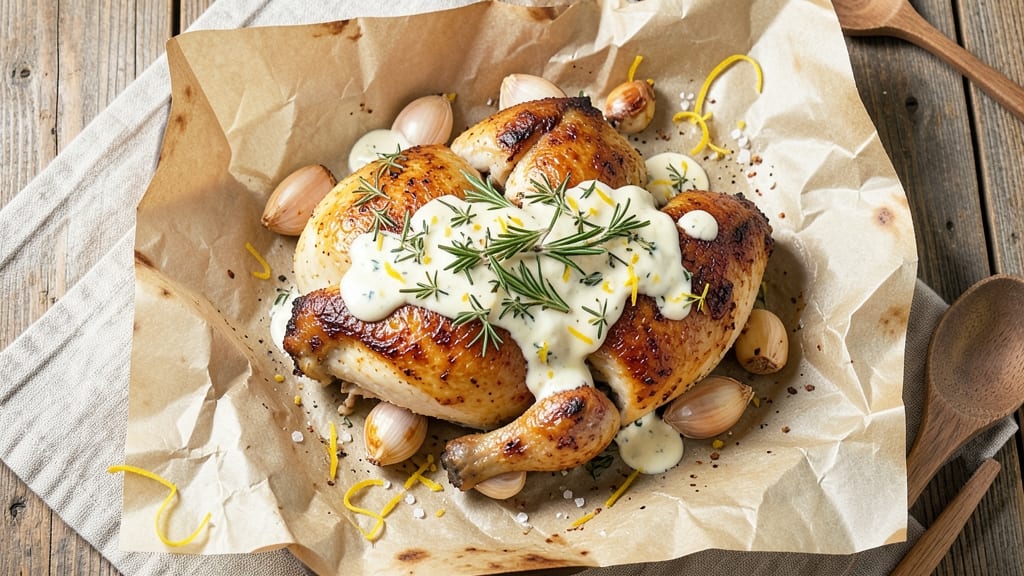
This baked chicken in parchment paper recipe delivers restaurant-quality results with minimal effort—juicy, flavorful chicken that stays impossibly tender thanks to the steam-poaching technique.
I developed this method after years of perfecting how to cook whole chickens without drying them out, and it became my go-to for weeknight dinners that still feel special.
The parchment paper creates a self-contained cooking environment that locks in moisture while allowing the herbs and aromatics to infuse directly into the meat.
The beauty of this approach lies in its simplicity: no basting required, no risk of overcooking, and cleanup that takes less than five minutes. You simply season the chicken, wrap it in parchment with fresh herbs and citrus, and let the oven do the work.
The result is perfectly golden skin with tender, juicy meat that practically falls apart at the touch—no matter what cut you use. This technique works equally well for thighs, drumsticks, or even small whole chickens.
What makes this recipe truly foolproof is how forgiving it is. The parchment paper acts as a barrier, preventing the chicken from drying out even if you're not meticulous about timing.
The herbs and citrus create a bright, aromatic crust that seals in flavor, while the steam keeps the interior moist. You'll end up with chicken that's juicier than grilled or pan-seared versions, with a depth of flavor that comes from the slow, even cooking.
Serve this with roasted vegetables or a fresh salad for a complete meal that requires almost no active time. The parchment paper makes plating effortless—just tear it open at the table and let guests serve themselves.
This is the kind of recipe that transforms a simple dinner into something memorable without requiring advanced skills. Let's get started with the perfect technique.
Ingredients for baked chicken in parchment paper
Precision-cut herbs, aromatic citrus, and steam-poaching secrets for flawless parchment-baked chicken every time.
| Ingredient | Amount | Notes |
|---|---|---|
| Chicken Thighs (bone-in, skin-on) 🍗 | 1 ½ lb | Evenly sized for consistent cooking |
| Unsalted Butter 🧈 | ½ cup | Cold, cubed for even melting |
| Fresh Rosemary 🌿 | ¼ cup | Chopped, stems removed |
| Fresh Thyme 🌿 | ⅛ cup | Leaves only, finely chopped |
| Garlic Cloves 🧄 | 4 cloves | Smashed for intense flavor |
| Lemon Zest 🍋 | 1 tbsp | From 1 medium lemon |
| Lemon Juice 🍋 | 2 tbsp | Freshly squeezed |
| Extra-Virgin Olive Oil 🫒 | 1 tbsp | High-quality for richness |
| Diamond Crystal Kosher Salt 🧂 | 1 ½ tsp | For seasoning and crust |
| Ground Black Pepper 🌶️ | ½ tsp | Freshly cracked |
| Heavy Cream 🥛 | ¼ cup | Optional for extra richness |
| Baking Parchment Paper 📄 | 2 sheets | 18x12 inches each |
The chicken thighs are non-negotiable here—skin-on, bone-in cuts deliver the best flavor and moisture retention. Look for evenly sized pieces at Whole Foods or your local butcher shop for consistent results. Fresh herbs are worth the investment: rosemary and thyme from the bulk section at Trader Joe's or a trusted farmers market will give you that bright, aromatic profile. The butter should be cold and cubed—this ensures it creates a flavorful crust without melting prematurely. For the lemon, organic is ideal to avoid bitterness, but conventional works fine if you zest and juice immediately. The parchment paper acts as your secret weapon—high-quality baking parchment (not wax paper) is essential for even heat distribution and easy cleanup.
No fresh rosemary? Dried works at one-third the amount, but the flavor won't be as vibrant. Substituting chicken thighs for breasts? Use bone-in breasts for better moisture, but reduce cooking time by 10-15 minutes. The heavy cream is optional but transforms the dish—skip it for a lighter version. For the garlic, smashing the cloves releases more flavor than mincing. If you're short on time, pre-minced garlic from a jar will work, but fresh is always superior. The olive oil should be extra-virgin—anything less will taste harsh. For the salt, Diamond Crystal kosher salt dissolves more easily than table salt, but Morton's works fine if that's what you have on hand. The black pepper should be freshly cracked—pre-ground loses potency quickly.
Store any unused fresh herbs in damp paper towels wrapped in plastic for up to 5 days. The butter can be kept at room temperature for 1 week or refrigerated for 3 months. This recipe reheats beautifully—cover with foil and bake at 350°F for 15 minutes to restore juiciness. The parchment-wrapped chicken keeps well in the fridge for 3 days, making it perfect for meal prep. For longer storage, freeze the wrapped packages for up to 3 months—just thaw overnight in the fridge before reheating. The citrus zest loses potency after 2 weeks, so zest fresh when ready to use for maximum brightness.
Why You'll Love This Recipe
- One-Pan Magic: I swear by this method—just the chicken, herbs, and butter wrapped in parchment, then straight into the oven. No pans to wash, no mess to clean, and honestly? That’s my kind of dinner.
- Skin-Golden, Juice-Rich: The butter bastes the skin to crispy perfection while the garlic and rosemary melt into the meat—creamy inside, crispy outside, with that herby aroma that makes the whole house smell like a bistro. (Yes, even on a Tuesday night.)
- Meal Prep Hero: I make a double batch on Sundays because reheating these is a dream—just pop them back in the oven for 10 minutes, and they’re just as good as day one. Perfect for lunches or when you’re too tired to cook.
- Budget-Friendly Luxury: Bone-in, skin-on thighs stretch my grocery budget, and the butter and herbs add that restaurant-quality flavor without breaking the bank. Between us, this is how I trick people into thinking I’m a fancy cook.
Step-by-step instructions for herbed steam-poached chicken
This method delivers perfectly moist chicken with crispy skin and aromatic herb infusion—no basting required.
Prepare the Herb Butter and Seasoning
In a small bowl, combine the 0.5 cup unsalted butter, 0.25 cup fresh rosemary, 0.125 cup fresh thyme, 4 smashed garlic cloves, 1 tbsp lemon zest, 1.5 tsp kosher salt, and 0.5 tsp black pepper. Use a fork to mash everything together until the butter softens slightly and the mixture becomes fragrant. This herb butter will infuse the chicken with layers of flavor while keeping it incredibly tender.
Transfer the mixture to a small ramekin and refrigerate for 15 minutes while you prepare the chicken. The cold butter will be easier to handle and won't melt prematurely during baking. This step ensures every bite carries that herby, citrusy richness throughout the meat.
Assemble the Chicken Packages
Preheat your oven to 375°F. Lay out one of the 2 sheets baking parchment paper on your work surface. Place one of the 1.5 lb chicken thighs skin-side down in the center. Gently press the 1 tbsp olive oil over the skin to help it crisp later.
Spoon about 2 tablespoons of the herb butter mixture onto the chicken, spreading it evenly over the meat side. Fold the parchment paper over the chicken, creating a sealed package. Repeat with the second chicken thigh and second sheet of parchment. The parchment creates a steam chamber that locks in moisture and infuses flavor without drying out the meat.
Bake for Juicy Perfection
Place the sealed chicken packages on a baking sheet and bake for 45-50 minutes until the internal temperature reaches 165°F and the skin is golden brown and crispy. The parchment will prevent the chicken from sticking while allowing the steam to work its magic.
Real talk: Don't open the oven during baking. Every time you peek, you release steam and extend cooking time. The chicken is done when it reaches 165°F in the thickest part of the thigh—this ensures it's safe to eat while remaining juicy rather than dry.
Rest and Finish with Cream
Remove the chicken from the oven and let it rest for 10 minutes before opening the parchment packages. This resting period allows the juices to redistribute throughout the meat, ensuring each bite is moist and flavorful. While it rests, heat the 0.25 cup heavy cream in a small saucepan over low heat until warm but not boiling.
Carefully open the parchment packages and pour the warm cream over the chicken. The cream will soak into the meat, adding another layer of richness. Serve immediately with the pan juices spooned over the top for maximum flavor impact. Each piece should have crispy, golden skin with tender, herb-infused meat underneath.
Pro Tips For Making Baked Chicken In Parchment Paper
- CRANK THE HEAT FIRST: Start your oven at 425°F (220°C) for the first 15 minutes—this blasts the skin crispy before the parchment softens. I used to bake it at 375°F (190°C) straight away, and the skin always ended up greasy instead of golden. High heat upfront locks in the flavor.
- SALT THE CHICKEN 2 HOURS EARLY: Bone-in, skin-on thighs need time to absorb salt—do it the night before or at least 2 hours ahead. I learned this after brining a batch and realizing the skin stayed tough; dry salt seasoning works just as well when given time to penetrate.
- CHOP HERBS FINE (OR SKIP): If you’re using fresh rosemary and thyme, finely chop them so they infuse the butter and chicken evenly. Too many big sprigs? They’ll just sit on top looking pretty while the flavor hides. (Or just buy dried—same effect, less work.)
- DON’T OVERFILL THE PARCHMENT: Leave room to fold the parchment loosely—crowded packages steam instead of brown. I once stuffed mine tight, and the chicken ended up soggy. Aim for a 2-inch gap around the edges for crispy edges and even cooking.
Regional styles of these flavors
Southern Comfort Style
In the Deep South, we love our chicken rich and flavorful—this version swaps rosemary for 1 tbsp fresh sage and adds ½ cup diced onions to the herb butter. I often include ½ tsp smoked paprika for that subtle smoky touch that reminds me of my time in Charleston.
Serve with cornbread and collard greens for a full Southern feast. The parchment method keeps the chicken juicy while letting those deep, earthy flavors shine through. 🌶️
Italian Herb Twist
For an Italian-inspired take, replace thyme with ½ cup fresh oregano and add 1 tbsp lemon juice plus 1 minced garlic clove to the butter mixture. I like to sprinkle ½ tsp red pepper flakes over the chicken before sealing it in parchment for a hint of heat.
Pair this with roasted cherry tomatoes and crusty bread—it's like a rustic Italian Sunday dinner. The citrus and herbs create a bright, aromatic crust that's perfect with white wine. 🍷
French Herb de Provence
This French-inspired version uses 1 tbsp Herb de Provence (a mix of dried herbs like thyme, rosemary, and savory) instead of fresh. Add 1 tsp Dijon mustard to the butter for depth, and finish with a sprinkle of grated Parmesan cheese before baking.
The Herb de Provence gives a complex, earthy flavor that's perfect with a side of ratatouille. I often serve this with a simple green salad**> and a glass of Sauvignon Blanc. The parchment method keeps the chicken tender while allowing the herbs to infuse deeply. ✨
Spicy Cajun Kick
For a Louisiana-inspired version, mix 1 tbsp Cajun seasoning (like Tony Chachere's) into the herb butter and add ½ tsp cayenne pepper for extra heat. I like to include ½ cup diced bell peppers in the parchment for a sweet-spicy contrast.
Serve with dirty rice and cornbread—this version is bold and full of flavor. The parchment method ensures the chicken stays juicy even with all the spices. 🔥
Mediterranean Lemon-Garlic
This version is bright and citrusy, perfect for warm weather. Replace the rosemary with ½ cup fresh parsley and add 1 tbsp grated lemon zest plus 2 minced garlic cloves to the butter. Finish with a sprinkle of feta cheese crumbles before sealing in parchment.
Serve with a Greek salad and olives for a refreshing, flavorful meal. The lemon and garlic create a zesty crust that pairs beautifully with a crisp white wine. 🍋
Nutrition facts
Frequently asked questions
Can I use chicken breasts instead of thighs in this recipe?
You can try, but thighs work best for this steam-poaching method. Chicken breasts are leaner and can dry out more easily when wrapped in parchment. If you must use breasts, choose bone-in, skin-on cuts and reduce baking time to 30-35 minutes at 375°F. For extra moisture, add 1 tbsp extra butter to the herb mixture and consider brining the breasts for 30 minutes before cooking.
How do I adjust cooking time for different chicken cuts?
For drumsticks, bake for 50-55 minutes until the thigh reaches 165°F. Wings take 35-40 minutes. Whole small chickens (3-4 lbs) need 1.5-2 hours at 350°F. Always use an instant-read thermometer—the parchment creates steam that can make visual cues unreliable. The key is hitting 165°F in the thickest part.
What if my chicken skin isn't crispy after baking?
This usually happens when the skin doesn't get enough direct heat. For crispier skin, place the sealed parchment packages directly on the oven rack instead of a baking sheet. You can also pat the skin dry before sealing and add 1 tsp extra olive oil to the butter mixture. If it's still soft, broil for 2-3 minutes at the end (watch closely!). The parchment creates steam, so you may need to unwrap briefly for the last minute to crisp.
Can I make this recipe ahead of time?
Assemble the parchment packages up to 24 hours ahead and refrigerate. Bake straight from the fridge, adding 10-15 extra minutes to the cooking time. For meal prep, store cooked chicken in the fridge for 3 days or freeze the wrapped packages for 3 months. Reheat by baking at 350°F for 15-20 minutes until warmed through. The parchment makes reheating foolproof.
What's the best way to reuse the parchment paper?
After cooking, let the parchment cool completely, then scrape off any debris. Store flat between sheets of parchment or in a dry place. You can reuse it 2-3 times for baking, but avoid using it for raw foods after contact with cooked meat. For cleanup, simply tear off the used parchment—no scrubbing required! The parchment's non-stick surface makes this method one of the easiest for cleanup.