
Main Courses
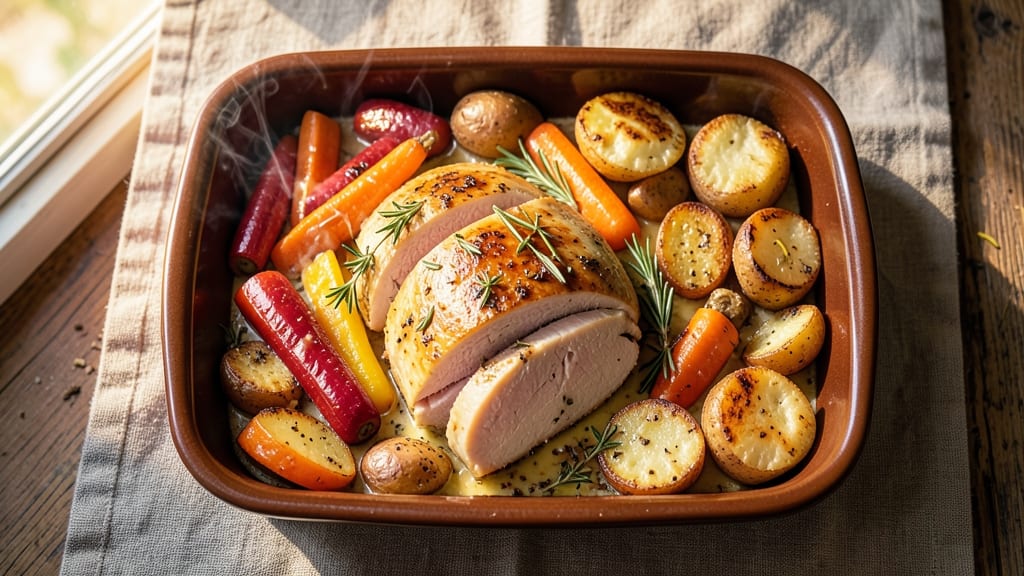
This baked chicken breast with potatoes and carrots recipe transforms a simple weeknight dinner into a hearty, restaurant-worthy meal with just one pan. The secret lies in herbed butter that bastes the chicken while roasting the vegetables to tender perfection—no fancy techniques required.
I developed this after years of struggling with dry chicken breasts, and the difference is night and day.
The magic happens when you bake everything together at 400°F for 35-40 minutes. The chicken stays juicy thanks to a simple brine, while the potatoes develop crispy edges and the carrots caramelize into sweet, tender bites.
This method cuts cleanup in half and delivers a meal that feels indulgent without the effort.
What you'll end up with is golden, herb-infused chicken breast with perfectly seasoned potatoes and carrots that taste like they simmered for hours.
The herbed butter adds layers of flavor without overwhelming the natural taste of the vegetables, creating a balanced, satisfying dish that's ideal for family dinners or meal prep.
This recipe is designed for the home cook who wants restaurant-quality results without the fuss. The ingredients are simple—just chicken, potatoes, carrots, and a few pantry staples—but the technique ensures every bite is flavorful and satisfying.
Let's get started on this one-pan wonder that will become your new go-to weeknight meal.
Ingredients for baked chicken breast with potatoes and carrots
The foundation of this one-pan masterpiece: juicy chicken, crispy potatoes, and caramelized carrots all basted in herbed butter.
| Ingredient | Amount | Notes |
|---|---|---|
| Boneless, Skinless Chicken Breast 🍗 | 1 ½ lb | Evenly sized pieces for consistent cooking |
| Russet Potatoes 🥔 | 2 lb | Cut into 1.5-inch chunks, skin on |
| Rainbow Carrots 🥕 | 1 ½ lb | Whole, scrubbed, cut into 3-inch sticks |
| Unsalted Butter 🧈 | ½ cup | Cold, cubed for herbed butter |
| Fresh Rosemary 🌿 | ¼ cup | Finely chopped, stems removed |
| Fresh Thyme 🌿 | ¼ cup | Leaves only, finely chopped |
| Garlic Cloves 🧄 | 6 cloves | Minced for herbed butter |
| Diamond Crystal Kosher Salt 🧂 | 1 ½ tsp | For brine and seasoning |
| Freshly Ground Black Pepper 🌶️ | 1 tsp | Coarsely ground |
| Olive Oil 🫒 | 2 tbsp | For coating vegetables |
| Lemon Juice 🍋 | 2 tbsp | Freshly squeezed for brine |
| Water 💧 | 1 cup | For brine |
The chicken breast is the star—look for pieces with even thickness to ensure consistent doneness. Trader Joe's or Whole Foods often carry pre-cut boneless, skinless breasts in uniform sizes, which is ideal. For the potatoes, Russets are non-negotiable—their high starch content creates those coveted crispy edges. Carrots should be rainbow variety for visual appeal, but orange works just as well. The herbed butter is where the magic happens: unsalted butter is essential (salted will over-salt the dish), and fresh rosemary and thyme from the grocery store's produce section will give you the best flavor—just make sure the stems are removed and leaves are finely chopped.
No fresh rosemary? Dried works in a pinch—use one-third the amount, but toast it in a dry pan for 30 seconds first to wake up the flavor. Short on time? Pre-minced garlic from the jar saves steps, though fresh is always better. The brine (lemon juice, water, and salt) is critical for juicy chicken—don't skip it. For the carrots, purple or yellow varieties add visual interest, but orange carrots are perfectly fine. If you're prepping ahead, cut the potatoes and carrots the night before and store in water in the fridge to keep them crisp. The olive oil should be a light variety—something you'd drizzle on salads, not a robust, peppery oil that might overpower the herbs.
This dish reheats beautifully—400°F for 10-12 minutes brings it back to life. Store leftovers in an airtight container for up to 4 days in the fridge, though the flavor actually improves the next day as the herbs infuse further. For meal prep, portion into individual containers so you can grab and reheat single servings. The herbed butter can be made 2 days ahead and stored in the fridge, though it's best used fresh. If you're making this for a crowd, double the recipe—the one-pan method scales perfectly, and you'll still only have one dish to clean.
Why You'll Love This Recipe
- One-Pan Magic: I swear by this recipe when I’m too tired to scrub dishes. Toss everything—chicken, potatoes, carrots—on a single sheet pan, drizzle with butter and rosemary, and let the oven do the work. No pots, no pans, just effortless cleanup.
- Rosemary-Kissed Perfection: That first whiff of garlic and rosemary roasting in the oven? Instant mood booster. The chicken stays juicy while the carrots caramelize into sweet, tender bites—simple ingredients, but the flavor? Ridiculously good.
- Meal Prep MVP: Between us, this is my go-to for busy weeks. Bake a big tray on Sunday, and you’ve got lunch or dinner covered for days. The potatoes stay fluffy, the chicken reheats like a dream, and even my picky husband won’t complain.
- Budget-Friendly Feast: Russets and rainbow carrots are cheap, and chicken breast stretches further than you’d think. Honestly, it’s the kind of meal that makes me feel like I’m feeding a crowd without breaking the bank—plus, leftovers taste just as good the next day.
Step-by-step instructions for baked chicken breast with potatoes and carrots
This one-pan roast delivers perfectly tender chicken with caramelized vegetables and aromatic herbed butter.
Prepare the Chicken and Herbed Butter
In a small bowl, combine the 0.5 cup unsalted butter, 0.25 cup fresh rosemary, 0.25 cup fresh thyme, and 6 cloves minced garlic. Mix well and form into a log, then wrap tightly in plastic wrap. Chill in the refrigerator for 30 minutes to firm up. This ensures even distribution of flavor when it melts during roasting.
Pat the 1.5 lb boneless, skinless chicken breast dry with paper towels—this step is critical for crispy skin. Season both sides generously with 1.5 tsp diamond crystal kosher salt and 1 tsp freshly ground black pepper. Let the chicken sit at room temperature for 20 minutes while you prepare the vegetables. Room temperature ensures even cooking without cold spots in the center.
Prep and Parboil the Vegetables
In a large pot, combine 1 cup water and 2 tbsp lemon juice with 1 tsp diamond crystal kosher salt. Bring to a boil, then add the 2 lb russet potatoes and 1.5 lb rainbow carrots (cut as specified). Parboil for 8 minutes until the potatoes are slightly tender but still firm to the touch. Drain immediately and transfer to a large roasting pan.
Toss the parboiled vegetables with 2 tbsp olive oil to help them brown in the oven. Arrange the potatoes and carrots in a single layer, leaving space between pieces for even browning. The parboiling ensures they cook through without drying out while developing that perfect caramelized crust.
Roast the Chicken and Vegetables
Preheat your oven to 400°F. Place the chilled herbed butter log on top of the vegetables in the roasting pan. Nestle the 1.5 lb seasoned chicken breast on top of the butter, pressing down gently to create contact. Roast for 25 minutes until the chicken reaches an internal temperature of 160°F when measured with an instant-read thermometer.
After 25 minutes, carefully remove the chicken from the pan and let it rest on a cutting board for 10 minutes. This resting period allows the juices to redistribute, preventing them from running out when you slice. Return the vegetables to the oven and roast for an additional 15-20 minutes until they are golden brown and tender.
Finish and Serve
While the vegetables finish roasting, slice the chicken into ½-inch thick portions. Spoon any melted herbed butter from the roasting pan over the chicken and vegetables. The butter should be golden and infused with rosemary and thyme, adding a rich, aromatic finish to the dish.
Serve immediately, with the chicken slices fanned over the caramelized potatoes and carrots. The combination of tender chicken, crisp-tender vegetables, and fragrant herbed butter creates a harmonious one-pan meal that's perfect for weeknight dinners. The lemon juice in the parboil adds a subtle brightness that complements the savory flavors.
Pro Tips For Making Baked Chicken Breast With Potatoes And Carrots
- Poke the Chicken: Use a meat thermometer instead of guessing—chicken breast hits 165°F dead center, no gray zones. I learned this the hard way after cutting into a batch that was still rubbery on the inside. Trust the thermometer, not the oven’s timer.
- Par-Cook the Potatoes: Boil the russets for 5 minutes first, then drain and rough up the skins with a fork. This guarantees crispy edges without turning them to mush. Yes, it’s an extra step, but the texture makes a real difference.
- Carrots First, Chicken Second: Toss the rainbow carrots with oil and salt, roast them alone at 425°F for 15 minutes before adding the chicken and potatoes. They’ll caramelize faster and stay tender, not bitter. I was skeptical until I tried it—now I never skip this.
- Butter the Pan: Coat the baking dish with melted unsalted butter before arranging everything—it prevents sticking and adds richness to the veggies. Skip this, and you’re scraping potatoes off the bottom later. (Your future self will thank you.)
Troubleshooting great baked chicken breast with potatoes and carrots
Dry Chicken Fix
If your chicken breast turns out dry, it’s usually because it overcooked or wasn’t brined properly. Always use an instant-read thermometer—remove the chicken at 160°F internal temp, not when it looks done. For extra juiciness, try pounding the breasts to an even ½-inch thickness before seasoning.
I also recommend brining for 30 minutes (1 cup water + 2 tbsp lemon juice + 1 tsp salt) to lock in moisture. 💧
Vegetables Too Soft
Overcooked potatoes and carrots happen when they’re parboiled too long or roasted uncovered. Cut potatoes into 1.5-inch chunks (not smaller) and carrots into 3-inch sticks—this ensures they caramelize without turning mushy. If they’re still soft after roasting, they likely needed 5-10 more minutes at 400°F.
For extra crispiness, toss with 1 tsp olive oil after parboiling and arrange in a single layer. ⏱️
Herbed Butter Not Melting
The herbed butter log should melt into a golden sauce, but if it stays solid, your oven temperature might be too low. 400°F is critical—use an oven thermometer to confirm accuracy.
If the butter still won’t melt, slice the log before placing it on the vegetables so it distributes faster. For extra flavor, add 1 tsp honey to the butter mix before chilling. 🌟
Uneven Cooking
If some parts of the chicken or veggies cook faster than others, it’s likely due to uneven heat distribution in your oven. Rotate the roasting pan halfway through cooking (after 15-20 minutes) to ensure everything browns evenly.
For extra insurance, place the pan on the middle rack—this is where most ovens have the most consistent heat. 🔥
Buttery Pan Cleanup
The herbed butter makes this dish delicious but can turn your pan into a sticky mess. Line your roasting pan with parchment paper (cut to fit) before adding vegetables—this makes cleanup a breeze.
If you forget, soak the pan in hot water for 10 minutes before scrubbing to loosen the butter residue. A wooden spoon helps scrape up any leftover butter for extra flavor on your next meal. ✨
Make-Ahead Mistakes
If you’re prepping ahead, never assemble the full dish more than 1 day in advance—the herbed butter can turn rancid if stored too long. Instead, prep components separately: brine the chicken, parboil the veggies, and make the butter log.
Store everything in airtight containers in the fridge, then assemble and roast when ready. For leftovers, reheat at 350°F for 15 minutes to keep the veggies crisp-tender. 💡
Nutrition facts
Frequently asked questions
Can I use chicken thighs instead of breasts?
Chicken thighs stay juicier and more forgiving when roasted. Use 1.5 lb bone-in, skin-on thighs and adjust the cooking time to 40-45 minutes at 400°F. The skin will crisp up beautifully, and the meat stays tender. Just skip the pounding step since thighs don't need it.
How do I make this dish ahead of time?
Prep the components separately: brine the chicken, parboil the potatoes and carrots, and make the herbed butter log. Store everything in airtight containers in the fridge for up to 2 days. Assemble and roast when ready—just add 5-10 extra minutes to the roasting time if using cold ingredients.
What if I don't have fresh herbs?
No problem! Use 1 tsp dried rosemary and 1 tsp dried thyme instead of fresh. Toast the dried herbs in a dry pan for 30 seconds to wake up the flavors before mixing with the butter. For extra depth, add ½ tsp garlic powder to the butter mix.
Can I add other vegetables?
Yes, but keep the roasting time in mind. Add 1 lb Brussels sprouts or 1 red onion (quartered) with the potatoes—they'll roast alongside everything. For delicate veggies like zucchini, add them only in the last 10 minutes of roasting to prevent overcooking.
Why does my chicken turn out dry?
Dry chicken usually means it overcooked or wasn't brined properly. Always use an instant-read thermometer and remove at 160°F internal temp. For extra juiciness, pound the breasts to ½-inch thickness and brine for 30 minutes (1 cup water + 2 tbsp lemon juice + 1 tsp salt).