
Main Courses
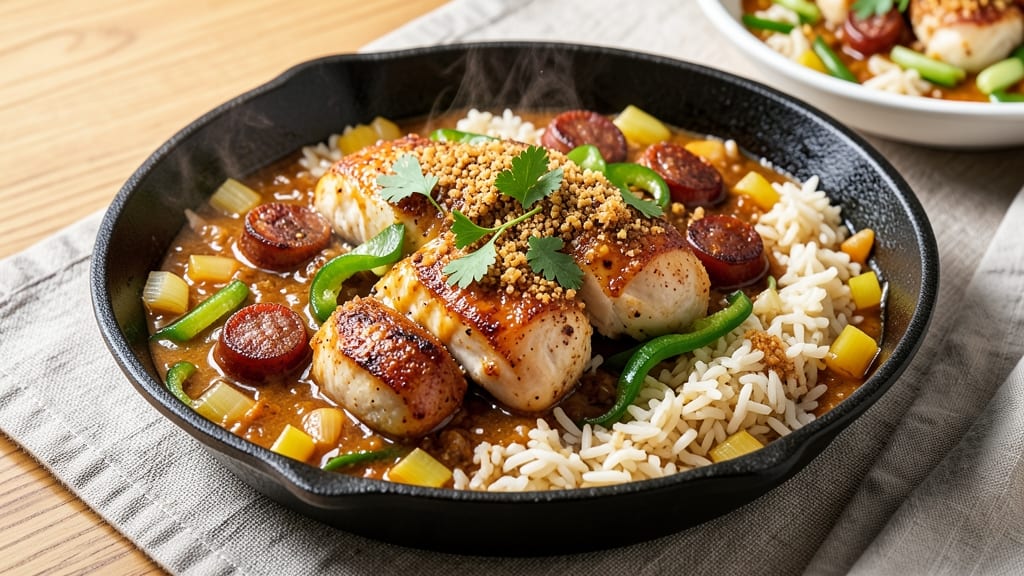
This baked chicken and sausage jambalaya recipe transforms a weeknight dinner into a smoky, spice-kissed celebration with minimal effort. 🔥 After years of perfecting one-pan techniques in my Atlanta kitchen, I've developed a method that delivers restaurant-quality depth without the fuss.
The secret lies in layering flavors—sautéing the holy trinity of onions, bell peppers, and celery until they're sweet and aromatic, then building complexity with andouille sausage and chicken thighs. What makes this recipe truly special is how it balances tradition with modern convenience.
While we're baking everything together in one cast-iron skillet, the flavors develop through slow cooking that mimics traditional stovetop methods. The result? Tender chicken, perfectly cooked rice, and sausage infused with Cajun spices that'll have your kitchen smelling like a New Orleans restaurant.
It's the kind of dish that gets better as leftovers, with each bite revealing deeper layers of smoky, spicy goodness. By the time you pull this from the oven, you'll have a one-pan feast that's ready to serve—no separate dishes to wash.
The top will be golden and slightly crispy, while the bottom remains tender, with rice perfectly infused with the rich jambalaya broth. Garnish with fresh parsley and a squeeze of lemon to brighten the flavors, and you've got a meal that's equal parts comforting and impressive.
This recipe works beautifully as a standalone main course or alongside a simple green salad and crusty bread. The leftovers reheat perfectly, making it ideal for meal prep or feeding a crowd. Let's get cooking—your taste buds will thank you.
Ingredients for baked chicken and sausage jambalaya
Pantry staples plus a few key ingredients for a one-pan jambalaya that tastes like New Orleans.
| Ingredient | Amount | Notes |
|---|---|---|
| Boneless Chicken Thighs 🍗 | 1 ½ lb | Trimmed of excess fat |
| Andouille Sausage 🌭 | 1 lb | Smoked variety preferred |
| Long-Grain White Rice 🍚 | 2 cups | Uncooked, not instant |
| Yellow Onion 🧅 | 1 whole | Diced into 1/4-inch pieces |
| Green Bell Pepper 🌶️ | 1 whole | Diced into 1/4-inch pieces |
| Celery Stalks 🧄 | 3 whole | Diced into 1/4-inch pieces |
| Garlic Cloves 🧄 | 4 cloves | Minced finely |
| Cajun Seasoning 🌶️ | 2 tbsp | Homemade or store-bought |
| Dried Thyme 🌿 | 1 tsp | Or 1 tbsp fresh |
| Smoked Paprika 🌶️ | 1 tsp | For smoky depth |
| Chicken Broth 💧 | 2 cups | Low-sodium preferred |
| Tomato Paste 🍅 | 2 tbsp | Squeeze tube works |
| Lemon Juice 🍋 | 1 tbsp | Freshly squeezed |
| Fresh Parsley 🌿 | ¼ cup | Chopped for garnish |
| Olive Oil 🫒 | 2 tbsp | Extra-virgin preferred |
| Salt 🧂 | 1 ½ tsp | Kosher or sea salt |
| Black Pepper 🌶️ | ½ tsp | Freshly ground |
The andouille sausage is non-negotiable here—it's what gives this dish that authentic smoky kick. Zatarain's or Johnsonville are my go-tos, but any smoked sausage will work. If you can't find andouille, smoked kielbasa is a decent stand-in. The chicken thighs are better than breasts for this recipe—they stay juicy while baking. Look for ones with good marbling; that's what keeps them tender. For the holy trinity (onion, bell pepper, celery), fresh is best, but frozen chopped veggies will save time if you're in a pinch. Just make sure to drain them well—no one wants soggy jambalaya.
No Cajun seasoning? Mix your own with paprika, garlic powder, onion powder, cayenne, and oregano. The tomato paste can be skipped if you're not a fan, but I always use it—it adds a nice depth of flavor. Fresh parsley is ideal for garnish, but dried parsley at half the amount works in a bind. The rice? Long-grain white is traditional, but jasmine or basmati will work too. Just don't use instant—it won't absorb the broth the same way. For the broth, low-sodium is key unless you're adding extra salt later. If you're using a pre-made Cajun seasoning, check the label—some have added salt that might make the dish too salty.
This jambalaya tastes even better the next day, so make extra—it reheats beautifully. Store leftovers in an airtight container in the fridge for up to 4 days. For freezing, portion into single servings first—it reheats better that way. The flavors meld overnight, so if you're prepping for a crowd, let it sit at room temperature for 30 minutes before serving. Garnish with fresh parsley and a squeeze of lemon right before eating—it brightens everything up. And if you've got any crusty bread left over, use it to soak up the extra sauce.
Why You'll Love This Recipe
- One-Pan Magic: I swear by this trick—just toss everything into a single dish, bake, and walk away. No stovetop babysitting, no multiple pots, just that deep, smoky flavor from the chicken thighs and sausage caramelizing together.
- Smoky-Spiced Crave: The andouille sausage brings that unmistakable Cajun punch, while the chicken thighs stay juicy and the bell pepper adds a sweet crunch. Honestly, the first bite makes you want to skip dinner and eat it straight from the pan.
- Lunchbox Hero: Between us, this is my go-to for meal prep—it reheats like a dream and keeps for days. Pack it cold for work or freeze portions; the rice stays fluffy, and the flavors only get better as it sits.
- Budget Feast: Chicken thighs and sausage stretch over rice like a dream, and a single onion and pepper feed the whole family. I’ll be real: this is how I feed six people for under $15 without sacrificing taste.
Step-by-step instructions for baked chicken and sausage jambalaya
Here's how to make this one-pan wonder with rich flavors and perfect texture.
🍳 Step 1: Sear the Chicken and Sausage
Preheat your oven to 375°F and heat the 2 tablespoons olive oil in a large oven-safe skillet over medium-high heat. Cut the 1.5 lb boneless chicken thighs into 1-inch pieces and add them to the skillet. Cook for 4-5 minutes until golden brown on both sides.
Remove the chicken and set it aside. In the same skillet, add the 1 lb andouille sausage, sliced into ½-inch rounds. Cook for 3-4 minutes until lightly browned. Here's the thing—don't overcrowd the pan. Work in batches if needed to ensure everything gets properly browned. This browning builds deep flavor that carries through the whole dish.
👨🍳 Step 2: Sauté the Holy Trinity
Add the diced yellow onion, diced green bell pepper, and diced celery stalks to the skillet. Cook for 5-6 minutes until the vegetables soften and the onion becomes translucent. Stir occasionally to prevent burning—this is where the foundation of your jambalaya's flavor develops.
Add the 4 minced garlic cloves and cook for another 30 seconds until fragrant. Here's where it gets good—sprinkle in the 2 tablespoons Cajun seasoning, 1 teaspoon dried thyme, and 1 teaspoon smoked paprika. Stir everything together and cook for 1 minute to toast the spices and release their aromas. This step infuses the vegetables with that signature jambalaya heat.
🥘 Step 3: Build the Jambalaya Base
Stir in the 2 tablespoons tomato paste and cook for 1 minute until it darkens slightly. Pour in the 2 cups chicken broth and scrape up any browned bits from the bottom of the pan—this is called deglazing, and it's flavor gold. Add the 2 cups long-grain white rice and stir to combine.
Return the chicken and sausage to the skillet, spreading everything evenly. The rice should be mostly submerged but not completely covered—this helps it absorb the liquid properly. Sprinkle with the 1.5 teaspoons salt and 0.5 teaspoon black pepper. Bring the mixture to a simmer over medium heat for 2 minutes to let the rice start absorbing the liquid.
🔥 Step 4: Bake to Perfect Texture
Transfer the skillet to the preheated oven and bake uncovered for 35-40 minutes. After 20 minutes, stir the jambalaya gently and add the 1 tablespoon lemon juice to brighten the flavors. Continue baking until the rice is tender and most of the liquid has been absorbed, about 5-10 minutes more.
Here's the trick—if the top looks dry before the rice is fully cooked, tent the skillet with aluminum foil and bake for another 5 minutes. The rice should be tender with just a slight bite in the center, and the liquid should be mostly absorbed but not completely dry. The final texture should be creamy with individual grains that cling together slightly.
🍽️ Step 5: Rest and Garnish
Remove the jambalaya from the oven and let it rest for 5 minutes covered with a clean kitchen towel. This resting period allows the flavors to meld and the rice to finish absorbing any remaining liquid. Stir in the 0.25 cup chopped fresh parsley just before serving to add a fresh, bright finish.
Serve immediately with crusty bread or over steamed rice if you prefer more. Each bite should deliver tender chicken, smoky sausage, and perfectly seasoned rice with that signature jambalaya heat. This dish tastes even better the next day, so make extra if you can—it's that good.
Pro Tips For Making Baked Chicken And Sausage Jambalaya
- Sear the Sausage First: That smoky, crispy crust on andouille isn’t just for looks—it’s what carries the flavor. Slice the sausage into ½-inch rounds, heat your Dutch oven or skillet to medium-high, and sear them 2-3 minutes per side until deeply browned. I used to skip this, and the jambalaya always tasted flat until I realized the difference.
- Pat Dry Those Thighs: Wet chicken thighs? They’ll steam instead of brown. After trimming excess fat, grab paper towels and really dry them—even the bone sides. This isn’t the prettiest method, but it’s the tastiest. Trust me, the crust on those thighs will make your whole dish taste better.
- Don’t Crowd the Onions: When sautéing onions and bell peppers, give them space. A packed pan releases moisture and steams the veggies instead of caramelizing them. Spread them out in a single layer and let them cook undisturbed for 5 minutes before stirring. Your future self will thank you when you taste that deep, sweet flavor.
- Layer Rice Last: This isn’t the most intuitive step, but it works: after browning the meat and veggies, remove the pan from heat, stir in the broth and spices, then let it cool slightly before adding the rice. This prevents the rice from absorbing all the liquid too fast and turning mushy. Sounds weird, but it locks in that perfect texture.
Essential equipment for this recipe
Cast Iron Skillet
This is my non-negotiable tool for jambalaya—nothing beats the even heat distribution and flavor development of a good 12-inch cast iron skillet. I use my Lodge Pre-Seasoned Cast Iron (it’s my 47th piece, after all), but any well-seasoned skillet will work.
The deep sides help with layering ingredients, and it retains heat perfectly during baking. If you don’t have cast iron, a heavy stainless steel skillet like All-Clad is a great alternative. Just avoid non-stick—it can’t handle the high heat needed for proper browning. 🔥
Oven Thermometer
Your oven’s temperature gauge is often off by 25°F or more, and jambalaya demands precision at 375°F. I swear by the Thermoworks Oven Thermometer—it’s cheap, accurate, and saves you from undercooked rice or over-browned chicken.
Place it near your skillet while baking to ensure consistent results. Pro tip: If your oven runs hot, reduce the temperature by 25°F to compensate. Trust me, your jambalaya will thank you.
Sharp Chef’s Knife
A sharp 8-inch chef’s knife is essential for dicing the holy trinity (onion, bell pepper, celery) into ¼-inch pieces—this ensures even cooking and proper texture. I use my Wüsthof Classic (it’s been with me since CIA days), but any high-quality knife will do.
Dull knives crush vegetables, leading to mushy jambalaya. If your knife isn’t sharp, take 10 seconds to hone it on a Whetstone before starting. Your prep time will thank you later. ✨
Measuring Cups and Spoons
Precision matters with rice and spices—2 cups of rice is not a "handful." Use dry measuring cups for the rice and spoon measures for the Cajun seasoning and paprika. I keep a set of OXO Good Grips in my kitchen; they’re durable and easy to read.
For the broth, a liquid measuring cup ensures you’re adding exactly 2 cups. Trust me, eyeballing these measurements leads to dry rice or bland flavors. Every little bit counts in jambalaya.
Tongs for Stirring
Long-handled tongs are your best friend for stirring jambalaya without overcrowding the pan. I use stainless steel tongs (like these from Mercer Culinary) to gently fold the rice and chicken without breaking up the chicken pieces. Avoid wooden spoons—they can’t handle the heat and might warp.
Stirring properly ensures even cooking and prevents the rice from sticking to the bottom. Plus, they’re easier to clean than a wooden spoon after a smoky, spicy jambalaya session. 💪
Aluminum Foil
This isn’t just for cleanup—it’s for rescuing your jambalaya if the top dries out before the rice is done. Tenting the skillet with foil traps steam and prevents the top from burning while the rice finishes cooking.
I keep a heavy-duty foil roll (like Reynolds Wrap) handy for this exact purpose. Just
Nutrition facts
Frequently asked questions
Can I use chicken breasts instead of thighs?
Chicken breasts will work, but thighs are ideal for this baked jambalaya. Thighs stay juicier during the long baking time, while breasts can dry out. If using breasts, cut them into 1-inch pieces and don't overcook—they're done at 165°F internal temperature. For extra moisture, add 1/4 cup chicken broth when assembling.
How spicy should this jambalaya be?
The recipe uses 2 tbsp Cajun seasoning and 1 tsp smoked paprika for a balanced heat level—think "warm with a kick," not "fire alarm." For milder flavor, reduce the Cajun seasoning to 1 tbsp and skip the smoked paprika. For extra spice, add 1/2 tsp cayenne pepper or a pinch of red pepper flakes when sautéing the holy trinity.
What's the best way to reheat leftovers?
Reheat jambalaya in the oven at 350°F for 20-25 minutes covered with foil to prevent drying. For microwave reheating, sprinkle 1 tbsp water or broth over the top and cover with a damp paper towel. Microwave on 50% power for 2-3 minutes, then stir and repeat if needed. Never reheat to a boiling point—this makes the rice mushy.
Can I make this dish without a cast iron skillet?
Use a heavy stainless steel Dutch oven or oven-safe ceramic skillet instead. Avoid non-stick pans—they can't handle the high heat needed for proper browning. If your pan isn't oven-safe, transfer the jambalaya to a baking dish after the initial stovetop cooking. The key is using a pan with 4-5 quart capacity to accommodate all ingredients comfortably.
How do I adjust this for a larger crowd?
Double the recipe but use a 14-inch cast iron skillet or Dutch oven—never crowd the pan. For 12 servings, increase chicken to 3 lbs, sausage to 2 lbs, rice to 4 cups, and broth to 4 cups. Bake at 375°F for 45-50 minutes, stirring once at 25 minutes. The larger volume needs extra time for even cooking.