
Main Courses
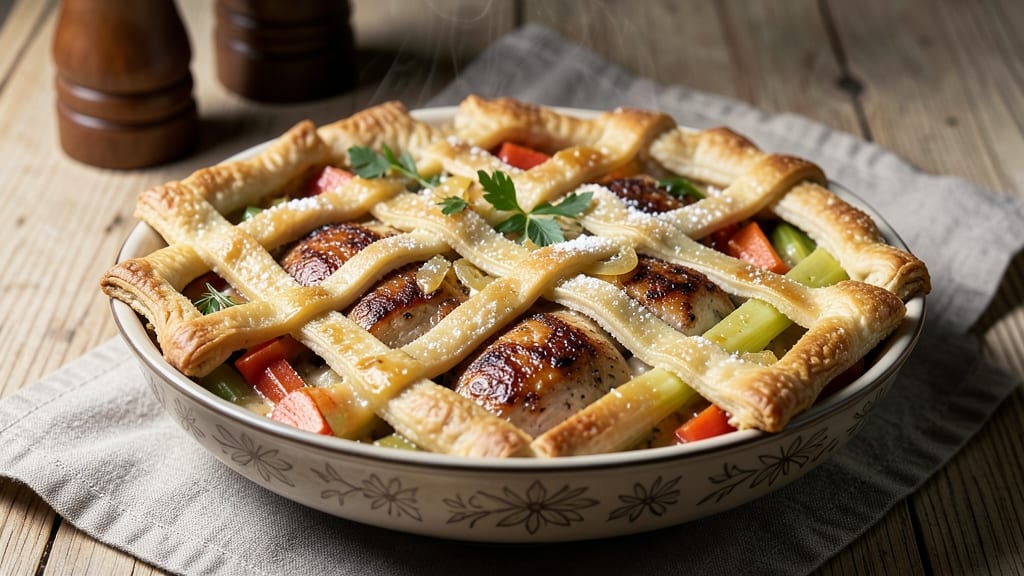
This Amish chicken pie recipe brings Old World tradition to your kitchen table with its flaky crust that perfectly hugs a savory, hearty filling. The secret lies in the crust—whether homemade with lard or butter for that signature rustic flavor, or a store-bought shortcut that still delivers that satisfying crunch.
I’ve perfected this recipe over years of family gatherings, where it disappears faster than you can say “more pie, please.”
The filling starts with tender chicken, slow-cooked until it falls apart easily, then mixed with simple pantry staples like onions, carrots, and celery—classic Amish comfort food. The crust, whether rolled out by hand or pressed into a pie dish, gets a golden-brown finish that seals in all the rich flavors.
This isn’t just a pie; it’s a centerpiece for Sunday dinners, potlucks, or any meal that calls for warmth and tradition.
What makes this recipe special is the balance of simplicity and depth. No fancy techniques here—just good ingredients and a little patience. The crust stays crisp while the filling remains tender, creating the perfect bite every time.
Serve it with mashed potatoes or a side of gravy for the full Amish experience, or enjoy it on its own as a satisfying meal.
Whether you’re baking for a crowd or treating yourself to a homemade classic, this pie delivers on comfort and flavor. The aroma alone will have everyone gathering around the table, and the first bite? That’s when the magic happens. Let’s get baking!
Ingredients for amish chicken pie
Just 14 ingredients for a pie that tastes like home-baked tradition.
| Ingredient | Amount | Notes |
|---|---|---|
| Chicken Thighs 🍗 | 2 ½ lb | Bone-in, skin-on preferred |
| Yellow Onion 🧅 | 1 whole | Medium-sized, diced |
| Carrots 🥕 | 3 medium | Peeled, sliced into rounds |
| Celery Stalks 🧅 | 3 whole | Trimmed, chopped |
| All-Purpose Flour 🌾 | 2 ½ cups | For crust and roux |
| Unsalted Butter 🧈 | ½ cup | Cold, cubed for crust |
| Lard 🧈 | ½ cup | Traditional Amish crust |
| Chicken Broth 💧 | 2 cups | Low-sodium preferred |
| Milk 🥛 | ½ cup | Whole milk for richness |
| Egg 🥚 | 1 whole | Large, for egg wash |
| Salt 🧂 | 1 ½ tsp | Kosher or sea salt |
| Black Pepper 🌶️ | ½ tsp | Freshly ground preferred |
| Dried Thyme 🌿 | 1 tsp | Or 1 tbsp fresh |
| Garlic Cloves 🧄 | 3 cloves | Minced for flavor |
The chicken makes this pie shine—bone-in, skin-on thighs stay juicy while cooking. Costco or your local butcher usually have the best deals on bone-in cuts. If you're using breasts, pound them thin first so they don't dry out. The crust is where the magic happens: lard gives that classic Amish flakiness, but butter works too if you're not traditional. For the veggies, Trader Joe's has pre-chopped onion, carrot, and celery mixes that save time—just check they're fresh. If you're making a big batch, double the veggies but keep the proportions balanced.
No lard? Coconut oil or extra butter works in a pinch, though purists will notice the difference. Short on thyme? Dried rosemary at half the amount adds a nice earthy note. The broth can be homemade or store-bought—just make sure it's low-sodium. For the crust, Diamond Crystal kosher salt dissolves better than table salt. Want to skip the egg wash? Brush with milk instead—it'll still brown beautifully. The garlic can be pre-minced from a jar if you're in a hurry, but fresh is always better.
This pie reheats beautifully—just cover with foil and warm at 350°F for 20 minutes. Keeps in the fridge for 4-5 days (if it lasts that long) and freezes for 3 months. I always make two pies when hosting—one for dinner, one for leftovers. The crust stays crisp for about 2 hours after baking, so serve it fresh if you can. For extra flakiness, chill the dough for 30 minutes before rolling. Trust me on that—worth the extra minute.
Why You'll Love This Recipe
- One-Pot Magic: I swear by this recipe—just brown the chicken thighs, toss in the onions, carrots, and celery (that classic "holy trinity" combo), thicken it with flour, and bake. No extra pans, no fuss. My kids think I’m a hero.
- Golden Crisp Top: That flour-thickened crust? It’s the star—crispy on top, creamy underneath. The chicken stays juicy, the veggies melt into the sauce, and honestly? It’s the kind of dish that makes you want to lick the plate.
- Leftovers for Days: Between us, I make this on Sundays and eat it all week. The filling reheats like a dream, and the crust stays perfect—even better the next day. (Yes, even on a Tuesday night.)
- Budget-Friendly Feast: Chicken thighs stretch farther than breasts, and carrots/celery/onions are cheap staples. I feed my whole family for under $15, and no one complains. That’s a win in my book.
Step-by-step instructions for Amish chicken pot pie
Here's how to build that legendary flaky crust and savory filling that makes this pie so special.
Cook the Chicken and Sauté the Vegetables
Pat the 2.5 lb chicken thighs dry with paper towels to remove any moisture. Season both sides generously with 1 tsp salt, 0.5 tsp black pepper, and 1 tsp dried thyme. Heat a large skillet over medium-high heat and add the chicken thighs skin-side down. Cook for 8-10 minutes until the skin is golden brown and crispy, then flip and cook for another 5-7 minutes until the internal temperature reaches 165°F. Remove the chicken from the skillet and set it aside to rest.
In the same skillet, add 1 whole yellow onion, 3 medium carrots, and 3 whole celery stalks. Cook for 5-7 minutes until the vegetables begin to soften. Add the 3 minced garlic cloves and cook for another 30 seconds until fragrant. This step builds the flavor base for your filling—don't skip it.
Make the Filling and Thicken the Sauce
Shred the cooked chicken thighs into bite-sized pieces and return them to the skillet with the vegetables. Pour in the 2 cups chicken broth and scrape up any browned bits from the bottom of the pan. Bring the mixture to a simmer and cook for 5 minutes until the flavors meld together.
In a separate bowl, whisk together 2.5 cups all-purpose flour, 1.5 tsp salt, and 0.5 tsp black pepper. Slowly whisk the flour mixture into the simmering chicken and vegetable mixture, stirring constantly until the sauce thickens to a gravy-like consistency. This should take about 2-3 minutes. Remove the skillet from heat and stir in the 0.5 cup milk. The filling should be rich, thick, and ready for assembly.
Prepare the Classic Amish Crust
In a large bowl, combine the 0.5 cup unsalted butter and 0.5 cup lard, both cut into small cubes. Use a pastry cutter or your fingers to work the butter and lard into the 2.5 cups all-purpose flour until the mixture resembles coarse crumbs with pea-sized pieces of fat. This is what creates that signature flaky texture—don't overwork it.
Add 1 whole egg and 0.5 cup milk to the bowl and mix gently with a fork until just combined. The dough should come together but not be sticky. Divide the dough into two equal portions and shape each into a disk. Wrap each disk in plastic wrap and refrigerate for 30 minutes while you prepare the filling.
Assemble and Bake the Pot Pie
Preheat your oven to 375°F. Roll out one disk of dough on a lightly floured surface to fit the bottom of a 9-inch pie dish. Gently press the dough into the dish, leaving a slight overhang on the edges. Pour the chicken filling into the prepared crust, spreading it evenly. Roll out the second disk of dough and place it on top of the filling, sealing the edges by pinching them together or crimping with a fork.
Brush the top crust with a beaten egg wash made from the remaining 1 whole egg and a splash of milk for a golden finish. Cut a few small slits in the top crust to allow steam to escape. Bake for 45-50 minutes until the crust is golden brown and the filling is bubbling through the slits. The pie is done when the internal temperature reaches 185°F.
Rest and Serve
Remove the pot pie from the oven and let it rest for 10-15 minutes before slicing. This resting period allows the filling to set and makes it easier to serve. The crust should be crisp and flaky, while the filling remains creamy and packed with tender chicken and vegetables. Serve warm with a side of crusty bread to soak up every last bit of that delicious gravy.
Pro Tips For Making Amish Chicken Pie
- Sear the Chicken First: Skip the slow start—pat those chicken thighs bone-dry and sear them in a hot skillet with oil until golden on both sides before adding anything else. I used to toss them straight into the pot with the veggies, and the pie always tasted undercooked at the center. Two minutes per side changes everything.
- Dice Veggies Uniformly: Cut onions, carrots, and celery into exactly ¼-inch pieces—no larger, no smaller. My grandmother called this "the thing that matters most" because uneven cooking means mushy carrots and crunchy celery fighting for space. A sharp knife and a ruler for reference save time (and frustration).
- Don’t Rush the Roux: When thickening the gravy with flour, cook it low and slow—at least 5 minutes—until it smells nutty and turns a pale gold. Rushing this step makes the pie taste raw and floury. Stir like you mean it, but keep the heat gentle. (Yes, even if you’re impatient like me.)
- Layer the Pie in Order: Start with the chicken, then the veggies, then the gravy—not the other way around. I learned this after one pie where the bottom layer of veggies turned to mush. The chicken stays juicy on top, and the veggies hold their shape. Trust the process.
Regional styles of these flavors
Pennsylvania Dutch Roots
The Amish chicken pie traces its origins to the Pennsylvania Dutch communities of Lancaster County, where hearty, resourceful cooking became a way of life. The original version relied on whatever was available—typically chicken, lard, and garden vegetables—reflecting the self-sufficient Amish lifestyle.
This pie wasn’t just a meal; it was a Sunday dinner centerpiece, often served alongside mashed potatoes, gravy, and fresh bread. The use of lard in the crust (instead of butter) was practical—it stayed solid in warm kitchens and created that signature flaky texture. 🌾
Ohio Amish Twist
In Ohio’s Amish communities, particularly in areas like Holmes County, the pie evolved with a slightly different approach. Here, butter often replaced lard in the crust (a nod to dairy-rich farm life), and the filling sometimes included corn or potatoes for added heartiness.
Ohio Amish cooks also favored whole wheat flour in the crust, giving it a nuttier flavor. The Ohio version tends to be slightly sweeter, with a pinch of sugar in the filling—a subtle nod to the region’s apple orchards.
The pie was (and still is) a staple at community gatherings, like barn raisings or church suppers.
Midwest Farmhouse Adaptations
As Amish families migrated westward into Indiana and Iowa, the pie adapted to local ingredients. In these states, dried apples or peaches were sometimes added to the filling for a touch of fruitiness, balancing the savory chicken.
The crust also became slightly thicker and more robust, likely due to the colder climates—more fat (lard or butter) was used to ensure flakiness even in winter kitchens. Midwest Amish cooks often served the pie with cream-based gravy or sour cream, a nod to the region’s dairy farms.
The pie’s rustic charm remained, but the filling became a little more adventurous with regional twists.
Modern Homestyle Updates
Today, many home cooks—whether Amish or not—put their own spin on the classic. Some swap lard for coconut oil (for a dairy-free option) or use store-bought pie crust for convenience, though purists argue it lacks that old-world flakiness. Others add mushrooms or peas to the filling for extra texture.
In urban Amish bakeries (like those in Georgetown, Texas), the pie is sometimes baked in a deep-dish style, with a lattice top for a fancier presentation. The core remains the same: tender chicken, simple veggies, and a crust that shatters with every bite. 🍗
Regional Serving Traditions
How you serve the pie varies by region. In Pennsylvania, it’s often paired with scratch-made mashed potatoes and apple butter for dipping. In Ohio, a cornbread muffin on the side is common, while in the Midwest, buttermilk biscuits take center stage.
Some families even serve it with a side of pickled beets—a tangy contrast to the rich filling. The Amish believe in simple, unpretentious meals, so the pie is always the star, never overshadowed by elaborate sides. The goal? Comfort, warmth, and a taste of home.
Nutrition facts
Frequently asked questions
Can I use chicken breasts instead of thighs for this pie?
Chicken breasts work, but they'll be less flavorful and more likely to dry out. If using breasts, pound them to ½-inch thickness and cook them for only 4-5 minutes per side until they reach 165°F. For best results, stick with thighs—they stay juicy and add rich flavor to the filling.
How do I make the crust extra flaky like traditional Amish pies?
The secret is keeping everything cold and using the right fat. Chill your dough for 30 minutes before rolling, and work quickly when baking. Use lard or butter (or a mix) and cut it into the flour until it's pea-sized pieces. Avoid overworking the dough—just mix until it comes together. A hot oven (375°F) and steam from the filling help create that signature flakiness.
Can I prepare this pie ahead of time?
Assemble the pie (unbaked) and refrigerate for up to 24 hours before baking. For make-ahead meals, bake it fully, then refrigerate for 4-5 days or freeze for 3 months. To reheat, cover with foil and warm at 350°F for 20-30 minutes. The crust stays crisp best when reheated this way.
What's the best way to serve Amish chicken pie?
Traditionally, it's served with mashed potatoes or buttermilk biscuits to soak up the gravy. For a complete meal, add a simple green salad or apple butter for dipping. In Ohio, some families serve it with cornbread muffins, while Midwest versions pair well with pickled beets for contrast. The Amish believe in simple, hearty sides—no need for anything fancy!
Why does my crust turn out soggy instead of crisp?
Soggy crusts usually happen from steam buildup or insufficient baking. Always cut slits in the top crust before baking to let steam escape. Bake until the internal temperature reaches 185°F and the crust is golden brown. For extra insurance, chill the filling slightly before assembling, and consider pre-baking the bottom crust for 5 minutes before adding filling.